








In the healthcare sector, the design and construction of medical buildings are essential for ensuring quality patient care and operational efficiency. As awareness grows regarding the connection between design, wellness, and environmental responsibility, healthcare facilities must prioritize informed design that meets the unique needs of patients, caregivers, and communities. Balancing technical performance with occupant comfort is crucial for creating environments that promote health and well-being.
GreenGirt CMH continuous insulation and SMARTci building enclosure systems provide innovative, durable solutions that meet these demands. Designed for energy efficiency, ease of installation, and long-term resilience, these systems support medical facilities in achieving goals such as net-zero carbon, trauma-informed design, and prefabrication. In this article, we will explore how GreenGirt CMH and SMARTci have been applied to various medical building construction projects, demonstrating their adaptability and effectiveness in supporting healthcare environments.
Overview of GreenGirt CMH and SMARTci Systems
In healthcare construction, the demand for sustainable materials is critical for meeting energy efficiency, air quality, and moisture control standards. GreenGirt CMH and SMARTci systems provide essential solutions by leveraging composite metal hybrid technology to provide thermal efficiency and stable internal temperatures with structural integrity – all vital for patient care. Importantly, these systems come with a Declare label and are Red List free, ensuring that they contribute to healthier indoor environments by avoiding harmful materials.
These systems also feature exceptional durability; GreenGirt CMH supports long-term decarbonization goals with sustainable materials. Additionally, SMARTci simplifies installation with its stack-and-go method, reducing labor costs and minimizing downtime.
These systems align with key trends in medical building design by enhancing trauma-informed environments that promote patient recovery. They prioritize sustainability, helping to achieve net-zero energy goals and facilitate prefabrication, which accelerates project timelines. Additionally, both systems provide the flexibility necessary for future expansions, allowing healthcare facilities to adapt to evolving needs.
Case Studies
In the following sections, we’ll explore three medical building projects where GreenGirt CMH and SMARTci systems were applied to meet the unique demands of healthcare construction.
Case Study 1: Boston Medical Center Menino Pavilion
The Menino Pavilion at Boston Medical Center (BMC) exemplifies modern healthcare design focused on sustainability and energy efficiency. As the largest safety-net hospital in New England, this facility was built to enhance patient care and improve hospital operations while minimizing environmental impact.
A key feature of the pavilion is the use of the GreenGirt CMH™ continuous insulation system, which provides a durable and efficient thermal barrier and assists with significantly reducing heat loss and enhancing overall building performance.

Sustainable construction practices were employed throughout, utilizing materials with recycled content to lower the environmental footprint. Energy-efficient HVAC systems optimize energy use while maintaining a healthy indoor climate. LED lighting throughout the facility further reduces energy consumption compared to traditional lighting, and water-saving plumbing fixtures and irrigation systems significantly reduce water usage.
Beyond its design and construction, the pavilion serves as a vital community resource, improving health outcomes for a diverse population in the surrounding area. The Menino Pavilion not only reflects BMC’s dedication to high-quality care but also sets a benchmark for future healthcare facilities focused on environmental sustainability.
Case Study 2: – UCHealth Greeley Hospital and Medical Center
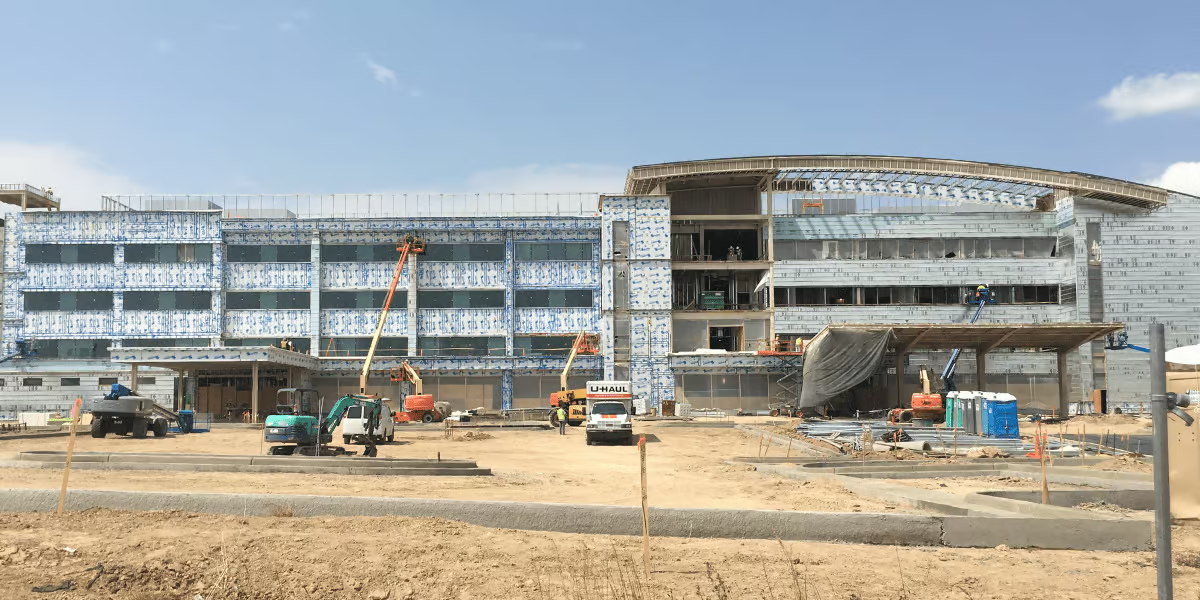
The University of Colorado Health broke ground on the Greeley Hospital in Greeley, Colorado, aiming to provide advanced healthcare services in a growing area. The facility spans approximately 153,000 square feet and includes 53 inpatient beds, a birth center, and a Level III trauma center.
To enhance energy efficiency, the hospital incorporated the SMARTci® building enclosure system with GreenGirt CMH™ sub-framing and integrated insulation panels. This system reduces thermal bridging and improves the overall performance of the building envelope. Additional energy-efficient features include advanced HVAC systems, LED lighting, and water-saving fixtures.
The UCHealth Greeley Hospital stands as a model of sustainability and community-focused healthcare, demonstrating how modern design and construction can align with environmental stewardship and patient needs.
Case Study 3: Cleveland Clinic Cole Eye Institute
The Cleveland Clinic Cole Eye Institute in Cleveland, Ohio, is a leading facility focused on ophthalmology and vision research. The institute enhances clinical care, education, and research while integrating sustainable practices.
A key feature is the use of the GreenGirt CMH™ continuous insulation system, which provides a durable thermal barrier, effectively reducing heat loss and improving energy performance.
Energy-efficient HVAC systems optimize air quality and minimize energy use, while LED lighting throughout the facility significantly lowers energy consumption. Water-saving fixtures further support the institute’s sustainability goals.
Designed to achieve LEED certification standards, the Cleveland Clinic Cole Eye Institute demonstrates a commitment to high energy efficiency and water conservation.
By focusing on sustainability and advanced eye care, the Cleveland Clinic Cole Eye Institute sets a benchmark for modern healthcare facilities, reinforcing its leadership in ophthalmology.
Investing in Sustainable Healthcare Environments
The integration of sustainable building practices, such as those offered by GreenGirt CMH and SMARTci systems, is crucial in the construction of medical facilities. These systems enhance energy efficiency and comfort while contributing to healthier indoor environments that support patient recovery and staff well-being. By prioritizing durable, Red List free materials and effective insulation, healthcare facilities can achieve sustainability goals while adapting to the evolving needs of the communities they serve. Embracing these solutions represents a commitment to environmental stewardship and an investment in the health and future of both patients and the broader community.
Pull Project-Ready Documents for Your Healthcare Project
View and download A2P’s system-specific specs, details, BIM/REVIT files, and more that you need to move from design intent to submittal-ready documentation.
Download A2P’s Technical Documents
Ready to add GreenGirt and SMARTci systems to your healthcare project? Connect with your A2P territory representative for system-specific pricing today.
Request a System-Specific Quote
Related Resources:
View A2P’s Solutions for Walls, Windows, & Roofs
View More A2P Healthcare Projects
A2P’s Continuous Insulation Z-Girt Product Selector Tool
–
–
Frequently Asked Questions
Are GreenGirt CMH and SMARTci Red List free?
Yes, GreenGirt CMH and SMARTci have a Declare label and are Red List free, which supports healthier indoor environments by avoiding harmful materials.
What is the SMARTci “stack-and-go” installation method?
SMARTci is designed to simplify installation using a “stack-and-go” method, helping reduce labor costs and minimize downtime, a big plus for active healthcare campuses and tight construction schedules.
What healthcare projects have used GreenGirt CMH and SMARTci?
GreenGirt CMH and SMARTci systems have been installed on several healthcare projects. Three examples are the Boston Medical Center Menino Pavilion, the UC Health Greeley Medical Center, and the Cleveland Clinic Cole Eye Institute.