







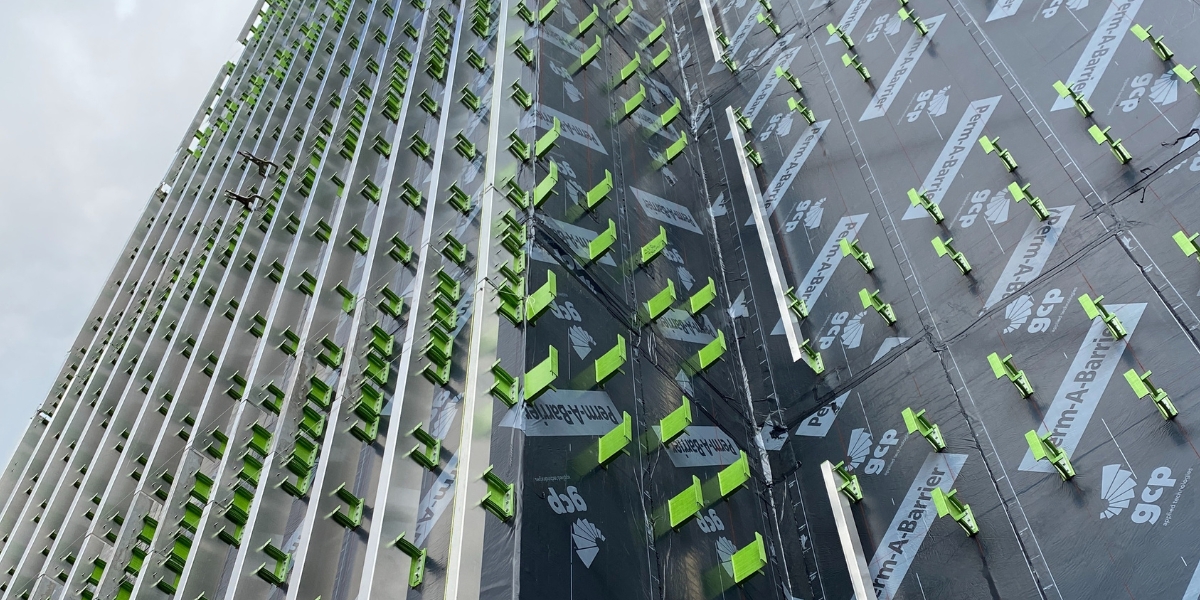

Environmental certifications for buildings can motivate designers and owners to prioritize sustainable construction as trends continue toward net-zero carbon emissions. GreenGirt CMH™, GreenGirt Steel™, and SMARTci® systems offer a comprehensive solution that boosts energy efficiency while preserving structural integrity.
This guide outlines key environmental certifications and highlights how integrating GreenGirt and SMARTci systems can help secure credits towards green building certification.
How GreenGirt CMH, GreenGirt Steel, and SMARTci Systems Contribute to Environmental Certifications
GreenGirt CMH and SMARTci systems utilize a composite metal hybrid design that prioritizes both structural integrity and energy efficiency.
Key benefits include:
- Static thermal efficiency levels up to 92-99%
- Maximized effective R-value retention
- Elimination of thermal bridging and thermal bypass
- Sustainable manufacturing practices within the United States
GreenGirt Steel is a perforated thermal metal Z-girt system that provides the highest static thermal efficiency of any metal Z-girt system.
Key benefits include:
- Highest R-value for a steel-based system
- Highest thermal efficiency of a steel-based system, into the 90%s
- Thermal breaks integrated to meet the performance demands of a project
Environmental Certifications
LEED
LEED (Leadership in Energy and Environmental Design) certification was created by the U.S. Green Building Council (USGBC) to acknowledge projects that meet specific standards for sustainability and energy efficiency through building design. The rating system varies depending on the type of building: new construction, renovations, and existing buildings.
The newest installment, LEED v5, focuses on three initiatives to achieve decarbonization, quality of life, and ecological conservation and restoration of ecosystems.
Projects have the opportunity to earn one of the following certification levels depending on the project’s sustainable design and energy efficiency achievements: Platinum, Gold, Silver, and Certified.
Visit our website to learn more about how GreenGirt CMH, GreenGirt Steel, and SMARTci systems can help you achieve LEED certification on your next project.
Download the GreenGirt CMH & SMARTci LEED v5 Credits Worksheet
Download the GreenGirt Steel LEED v5 Credits Worksheet
Passive House
Passive House certification focuses on the performance of energy-efficient buildings, with a mission to minimize energy consumption without sacrificing interior comfort for building occupants. This certification applies to residential, commercial, and institutional building types.
There are two main certification bodies associated with the Passive House certification: Passive House Institute (PHI) and Passive House Institute US (PHIUS).
In order to qualify for a Passive House certification, a building’s design must include the following:
- Space heating demand under 15kWh or 10W per square meter annually
- Space cooling and dehumidification match heating standards
- Primary energy limit of 120kWh annually
- Airtightness limited to 0.6 air changes per hour at 50 Pascals
- Thermal comfort throughout the year
Find out how GreenGirt CMH, GreenGirt Steel and SMARTci systems aid Passive House certification at GreenGirt.com.
BREEAM USA
Building Research Establishment Environmental Assessment Method (BREEAM) USA is an extension of BREEAM International, which evaluates building design, construction, and operational impacts, with a focus on future-proofing through sustainable practices, focusing on the mission for buildings to be net zero carbon emissions by 2050. Projects that qualify for BREEAM certification include: New construction, In-use, Communities, and Refurbishment and Fit-out.
BREEAM certification considers:
- Comprehensive environmental impact assessment
- Health, wellness, and resilience of building occupants
- Resource efficiency and supply chain sustainability
- Biodiversity and ecological conservation
- Transparency through disclosures and third-party verification
Green Globes
Green Globes, administered by the Green Building Initiative, is a flexible certification highlighting sustainability, occupant wellness, and resilience. Certification is scored from 1 to 4 globes based on meeting sustainability criteria: 35% of the 1,000 points deemed applicable to the project.
Green Globe certifications apply to the following building types: New Construction, Existing Buildings, Core & Shell, and Sustainable Interiors.
Discover how GreenGirt CMH, GreenGirt Steel, and SMARTci systems facilitate Green Globes certifications at GreenGirt.com.
Conclusion
Integrating GreenGirt CMH, GreenGirt Steel, and SMARTci systems provides exceptional energy efficiency and structural benefits, directly contributing to LEED, Passive House, BREEAM, and Green Globes certifications. Choosing these systems demonstrates commitment to sustainable construction, reduces carbon emissions, and lowers energy costs, paving the way for a greener future.
Get Certification-Ready Specs, Details, Drawings, & More for GreenGirt & SMARTci Systems
Download all the documents you need to specify GreenGirt and SMARTci systems to support your project in earning environmental and sustainability certifications.
Download A2P’s Technical Documents
Need help designing your project’s building envelope to be certification-ready? Our expert engineers are available to support you with technical design guidance.
Related Resources:
A2P’s Sustainability & Environmental Documentation
–
–
Frequently Asked Questions
What environmental building certifications can GreenGirt and SMARTci systems help support?
GreenGirt CMH, GreenGirt Steel, and SMARTci systems are presented as contributing to LEED, Passive House, BREEAM USA, and Green Globes certification goals.
What thermal-performance levels does GreenGirt CMH and SMARTci achieve?
GreenGirt CMH and SMARTci achieves static thermal efficiency up to 92–99%.
What are the Passive House performance requirements?
The five Passive House requirements are space heating demand under 15 kWh (or 10 W) per square meter annually, space cooling and dehumidification aligned with heating standards, primary energy limit of 120 kWh annually, airtightness limited to 0.6 air changes per hour at 50 Pascals, and year-round thermal comfort.