






Continuous insulation Z-girts have become integral to modern construction, providing essential thermal performance, improved energy efficiency, and building sustainability. However, a critical yet often underappreciated aspect is the structural strength of composite metal hybrid continuous insulation Z-girts, specifically their ability to withstand both crosswise (transverse) and lengthwise (longitudinal) forces. This article explains why balanced structural strength is vital and how composite metal hybrid systems, such as GreenGirt CMH™ and SMARTci® systems, uniquely meet these requirements.
Understanding Crosswise and Lengthwise Strength
Crosswise Strength (Transverse Strength) refers to the ability of the continuous insulation system to resist forces perpendicular to its length. These can include wind loads, seismic movements, and other external pressures.
Lengthwise Strength (Longitudinal Strength) involves resistance along the system’s length, managing thermal expansion and contraction, vertical loads from cladding, wind loads, and gravity-induced stresses.
Both types of strength are essential to maintaining system integrity, preventing premature failures, and ensuring the longevity and efficiency of the building envelope. While GreenGirt CMH is engineered with this balanced performance in mind, not all Z-girts are designed with the same level of structural consideration, so it’s important to evaluate so-called alternatives carefully.
Why Crosswise and Lengthwise Strength Matters in Continuous Insulation Z-Girts
The structural integrity of continuous insulation Z-girts directly impacts their thermal performance and overall durability. Z-girts lacking adequate crosswise strength are vulnerable to deformation or displacement under wind, cladding loads, or seismic activity. Conversely, insufficient lengthwise strength can lead to buckling, sagging, or compromised thermal performance.
Failures or inadequacies in structural strength can result in:
- Increased air leakage and compromised thermal efficiency.
- Reduced building lifespan and higher maintenance costs.
- Potential structural damage requiring extensive repair and downtime.
GreenGirt CMH and SMARTci: Engineered for Balance
GreenGirt CMH and SMARTci systems have been specifically designed with balanced structural strength in mind, ensuring optimal crosswise and lengthwise capabilities.
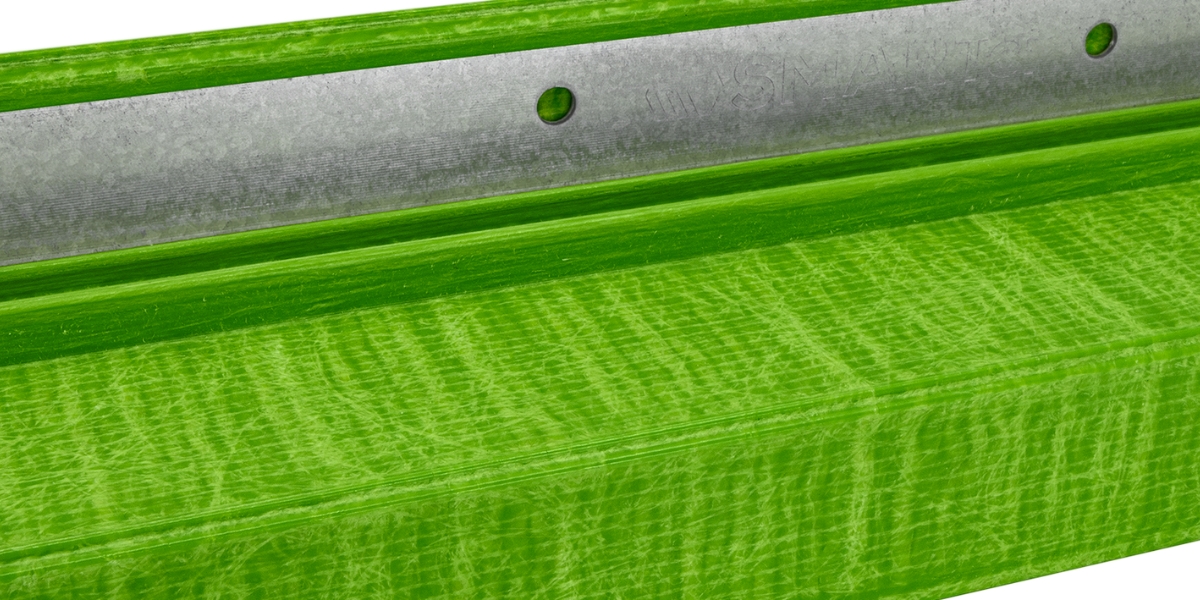
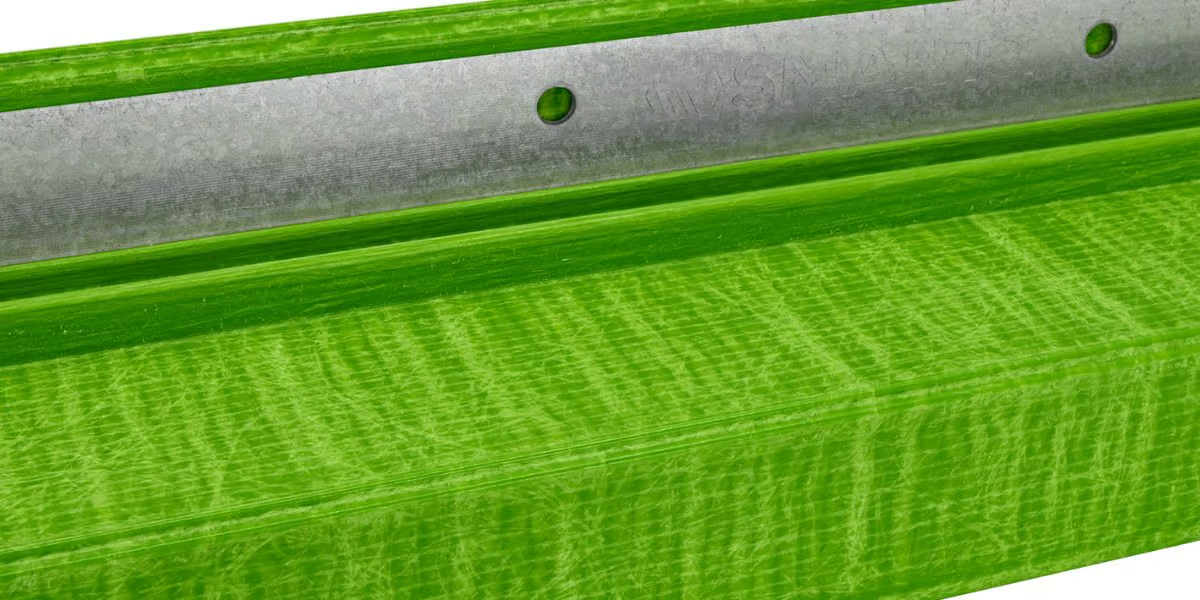
Utilizing composite metal hybrid technology, GreenGirt CMH integrates composite fiberglass materials with steel to create superior lateral and axial strength. The unique profile design resists lateral wind forces effectively while accommodating crosswise and lengthwise stresses, mitigating thermal bridging, and expansion-related issues.
GreenGirt CMH’s continuous glass rovings, aligned lengthwise for axial load capacity, oriented perpendicularly for crosswise shear and bending resistance, and supplemented with random rovings for isotropic load distribution, create a composite matrix with optimized mechanical properties in both principal directions. This fiber architecture significantly enhances transverse and longitudinal strength, improving moment capacity, reducing deflection, and ensuring stable performance under complex lateral and axial loading conditions. Additionally, the embedded metal reinforcement within the flanges increases local stiffness and load-transfer efficiency, boosting resistance to fastener pull-through, flange rotation, and localized bending, thereby further elevating the structural integrity of the CMH profile.
SMARTci utilizes GreenGirt CMH Z-girts in an air- and water-tight building enclosure system, providing exceptional adaptability to structural movements and thermal stresses. Its design effectively handles both lateral pressures and axial expansions, maintaining structural integrity and thermal efficiency.
Real-World Applications and Benefits
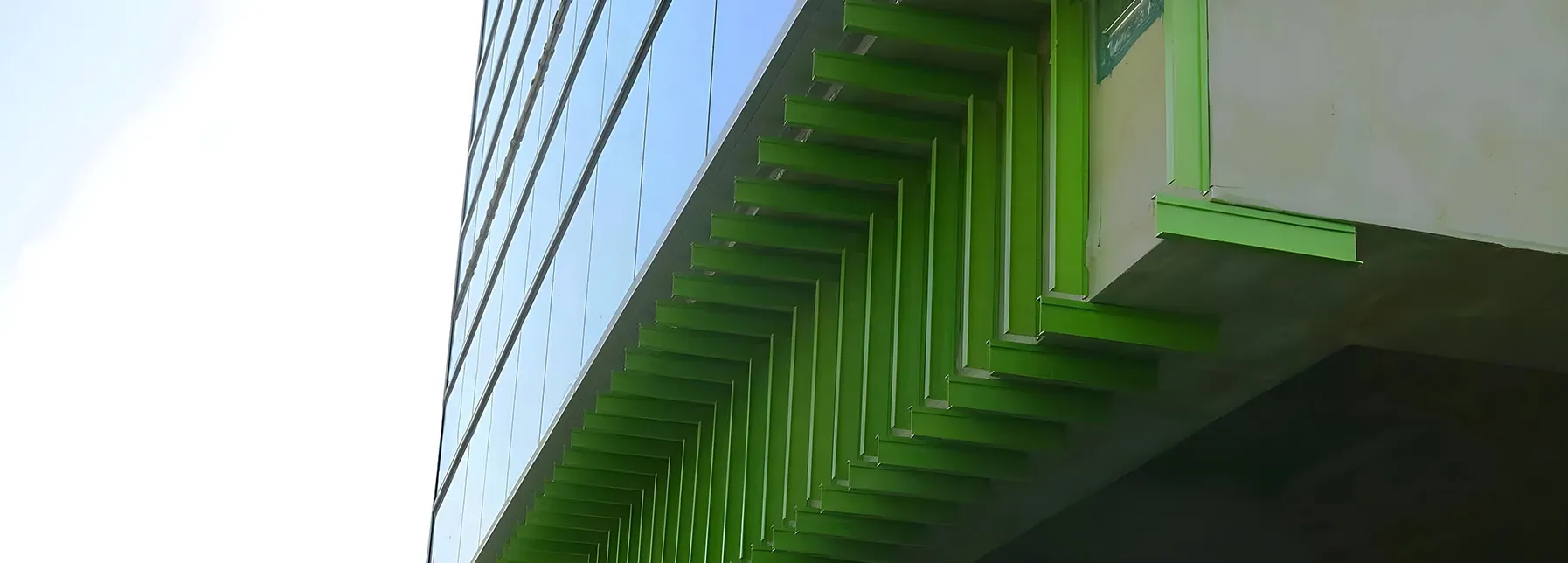
Consider a high-rise building in a coastal city frequently experiencing strong winds. A continuous insulation system lacking sufficient crosswise strength could lead to panel displacement or structural damage during storms. GreenGirt CMH, with its robust lateral strength, prevents this issue, maintaining a secure, insulated building envelope.
Benefits of balanced crosswise and lengthwise strength include: enhanced durability and longer service life; reduced risk of thermal inefficiency or structural repairs; improved overall building safety and resilience; overall safety and resilience of the wall assembly and building structure.
Conclusion
Effective continuous insulation Z-girts MUST integrate both crosswise and lengthwise strength to deliver long-term performance, reliability, and safety. GreenGirt CMH and SMARTci systems exemplify this balanced approach, offering exceptional structural integrity and optimized thermal performance. When selecting continuous insulation Z-girts or systems, prioritizing this balance ensures enduring quality and safety, supporting the long-term goals of architects, builders, and building owners alike for a structurally sound building.
Get Structural Data for GreenGirt CMH Z-Girts
Download data sheets and reports on the structural performance of GreenGirt CMH Z-Girts.
Download A2P’s Structural Data Reports
Have additional questions on the crosswise and lengthwise strength of GreenGirt CMH Z-Girts? Our expert engineers are available to offer technical guidance.
Related Resources:
A2P’s Continuous Insulation Z-Girt Classification Chart
A2P’s Continuous Insulation Z-Girt Product Selector
A2P’s Testing Capabilities for GreenGirt & SMARTci Systems
–
–
Frequently Asked Questions
What’s the difference between crosswise strength and lengthwise strength in continuous insulation Z-girts?
Crosswise strength is a Z-girt’s ability to resist forces perpendicular to its length like wind loads, seismic movement, and other external pressures. Lengthwise strength is resistance along the girt’s length, managing thermal expansion/contraction, vertical cladding loads, wind loads, and gravity-induced stresses.
What problems can happen if a continuous insulation Z-girt doesn’t have enough crosswise or lengthwise strength?
If crosswise strength is inadequate, Z-girts can be vulnerable to deformation or displacement under wind, cladding loads, or seismic activity. If lengthwise strength is insufficient, Z-girts can experience buckling or sagging, which can compromise thermal performance. Additionally, these weaknesses can lead to increased air leakage and reduced thermal efficiency, shorter building lifespan and higher maintenance costs, and even structural damage requiring extensive repair and downtime. GreenGirt CMH Z-girts succeed at eliminating these concerns with documented high-performance crosswise and lengthwise strength.
How do GreenGirt CMH Z-girts deliver both crosswise and lengthwise strength?
GreenGirt CMH is designed for balanced strength by combining composite fiberglass materials with steel to create strong crosswise and lengthwise performance, and by using a profile design that resists lateral wind forces while accommodating crosswise and lengthwise stresses. It also describes a fiber architecture with continuous glass rovings aligned lengthwise for axial load capacity, rovings oriented perpendicularly for crosswise shear/bending resistance, plus random rovings to support isotropic load distribution, along with embedded metal reinforcement in the flanges to increase local stiffness and load-transfer efficiency.