

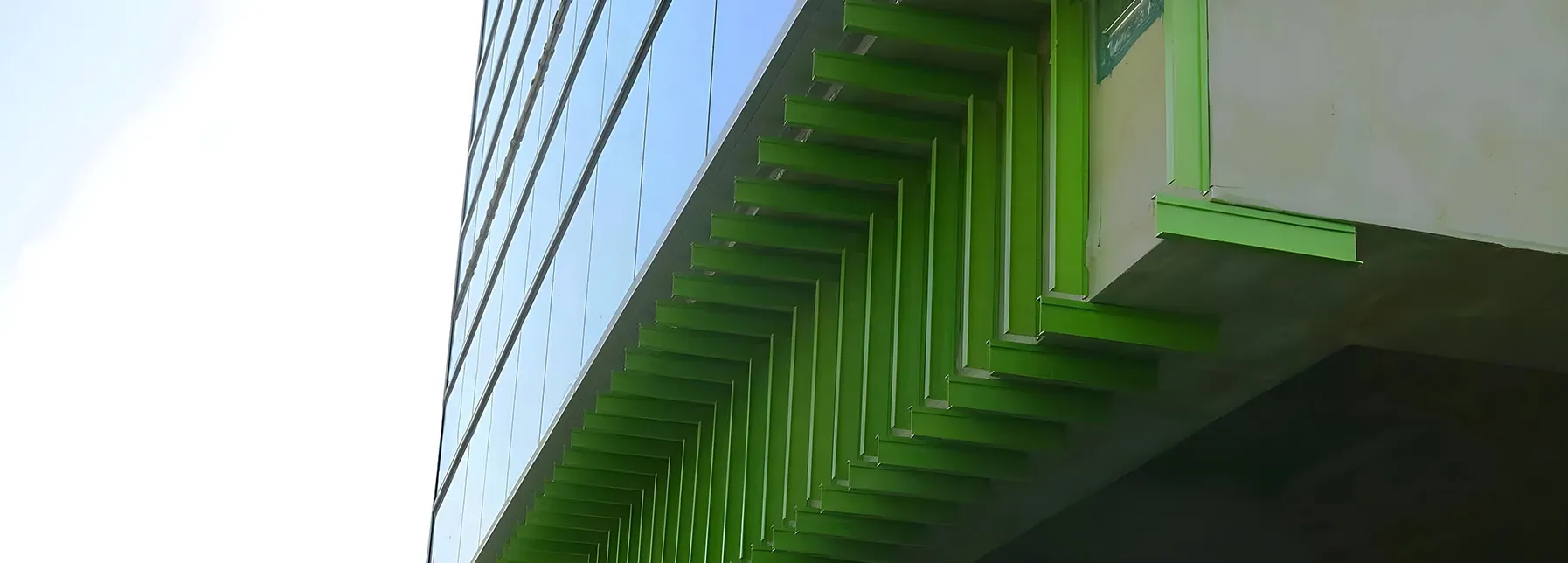






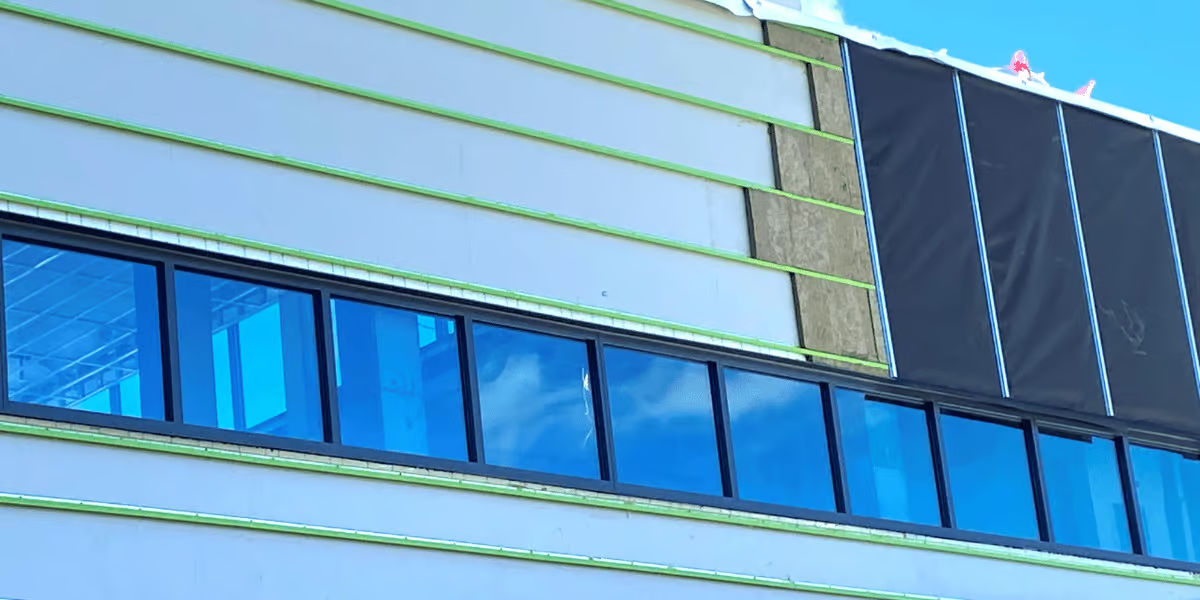
Construction of the Fort Fishers Visitor Center in Kure Beach, North Carolina, which used the GreenGirt CMH continuous insulation system on the building’s walls for protection against unpredictable climates.
Climate shifts are becoming more unpredictable, with heatwaves, heavier storms, and fluctuating moisture levels appearing in places typically known for more stable weather. As a result, designers must focus on designing buildings that will remain efficient and durable under a wide range of conditions. Using the GreenGirt CMH™ continuous insulation and SMARTci® building enclosure systems is essential for achieving security in designing for the unexpected, securing continuous insulation built for climate resilience.
Understanding Continuous Insulation and Building Enclosure Systems
Continuous Insulation Systems
Continuous insulation is a layer of insulation installed without breaks or “thermal bridges” on the exterior of a building. The insulation wraps the building uniformly, reducing heat transfer and improving overall energy efficiency. Continuous insulation can reduce thermal bridging, resulting in significant energy savings for buildings. The most effective continuous insulation system is GreenGirt CMH, which increases energy efficiency without sacrificing the structural integrity of a building through the combination of steel and composite fiberglass materials.
Building Enclosure Systems
Building enclosure systems include layers of protection—air barriers, vapor retarders, continuous insulation, and cladding—that separate indoor spaces from external elements. These layers work together to manage heat, airflow, and moisture. A building enclosure system is the building’s first line of defense against extreme weather conditions. To ensure the highest quality out of the building enclosure system, the most effective option is to use the SMARTci system, which integrates the GreenGirt CMH system into an air- and water-tight design that balances both energy efficiency and durability.
Why These Systems Matter in a Changing Climate
As climates become more erratic, buildings risk premature wear, reduced comfort, and inflated energy bills. In contrast, GreenGirt CMH and SMARTci systems:
- Eliminate Thermal Bridging: By eliminating weak points in the insulation, these systems stabilize indoor temperatures and cut energy use.
- Improve Condensation Resistance: This is crucial in humid or fluctuating environments where trapped moisture can lead to mold and structural damage.
- Enhance Comfort and Indoor Air Quality: A tighter building envelope keeps contaminants out and helps maintain consistent indoor temperatures.
- Prolong Building Lifespan: With less moisture infiltration, materials last longer, cutting down on maintenance and replacement costs.
Buildings in once-temperate regions may now face extreme heat and sudden downpours. Without continuous insulation and well-designed building enclosures, these structures may struggle to keep pace with today’s environmental challenges.
Key Design Strategies for Resilient Performance
- Adopt a “Perfect Wall” Approach
Arrange the control layers—water, air, vapor, and thermal—on the outside of the structural frame. This layout minimizes thermal bridging and eases construction detailing. - Select the Right Insulation Materials
Polyiso, mineral wool, spray foam, and XPS each offer unique benefits. For example, mineral wool provides excellent fire resistance and moisture tolerance, making it ideal for areas prone to wildfires or flooding. - Ensure Air and Vapor Barrier Compatibility
Air barriers must remain intact and continuous. Use mock-ups and perform blower door tests to confirm airtightness. Vapor retarders should be chosen based on climate zone and expected indoor humidity. - Detail Transitions and Penetrations Carefully
Joints, corners, and terminations are the most vulnerable spots for leaks. Protective membranes and precise flashing details can help maintain a continuous barrier against water intrusion.
Looking Ahead: Designing with Intent
As the climate continues to change, thermally broken cladding support systems are becoming non-negotiable for code compliance and a future-proof design. Integration of these methods helps buildings to maintain energy efficiency and durability in the face of intensifying weather patterns.
By investing in continuous insulation and robust enclosure strategies now, such as GreenGirt CMH and SMARTci, designers can create structures that will not only withstand tomorrow’s extremes but also excel in delivering sustainability and comfort for decades to come.
Get Support to Specify a Climate-Resilient Continuous Insulation Assembly
Share your project’s details and performance requirements, and our expert engineering team can assist you in selecting the best continuous insulation system to protect your building from unexpected climate conditions.
Related Resources:
A2P’s Climate-Resilient Solutions for Walls, Roofs, & Windows
A2P’s Continuous Insulation Z-Girt Product Selector Tool
A2P’s Testing Capabilities for GreenGirt & SMARTci
–
–
Frequently Asked Questions
What is continuous insulation, and how does it reduce thermal bridging?
Continuous insulation is insulation installed on the exterior of a building without breaks (“thermal bridges”), so it wraps the building more uniformly. By reducing heat transfer through weak points, continuous insulation improves overall energy efficiency and can deliver significant energy savings.
How do GreenGirt CMH and SMARTci help buildings handle moisture and condensation in changing climates?
GreenGirt CMH and SMARTci systems help improve condensation resistance in humid or fluctuating conditions, where trapped moisture can lead to mold and structural damage, by supporting a tighter, better-protected enclosure that manages heat, airflow, and moisture.
What is the “Perfect Wall” approach, and why is it recommended for resilient building design?
The “Perfect Wall” approach places the control water, air, vapor, and thermal layers on the outside of the structural frame. This helps minimize thermal bridging and makes detailing simpler, supporting more resilient performance as conditions become more extreme.