







Continuous insulation is an increasingly important part of modern building design, responsible for helping to improve the energy efficiency of buildings and creating more comfortable living and working spaces. As the need for energy conservation continues to increase, retrofitting existing buildings with continuous insulation is becoming a more urgent task. However, there are various challenges that come with building envelope retrofits, such as access to uneven substrates, moisture management, and structural limitations.
This article will provide readers with a comprehensive overview of the challenges associated with retrofitting existing buildings with continuous insulation and the solutions that can be employed to navigate these obstacles. Readers will gain an understanding of successful solutions for retrofitting existing buildings with GreenGirt CMH Delta™ Adjustable continuous insulation systems, ensuring optimal energy efficiency and improved comfort.
Understanding Continuous Insulation and Its Applications for Existing Buildings
Continuous insulation is a type of insulation that is continuous and uninterrupted throughout the entire assembly. It is designed to provide a higher level of thermal performance and energy efficiency than traditional insulation materials. Key characteristics of best practice continuous insulation systems include higher R-value, minimal or no thermal movement, improved fire resistance, and reduced condensation risk.
The use of continuous insulation in existing buildings has many benefits. Notably, the improved thermal performance of continuous insulation can help to reduce energy consumption and cost. Additionally, it can improve the overall indoor comfort and air quality, decrease noise levels, and reduce the risk of condensation. The improved performance of continuous insulation can also help to meet new energy codes and regulations, as many are now requiring the use of continuous insulation when retrofitting existing buildings.
Key Challenges in Retrofitting Continuous Insulation
Retrofitting continuous insulation to an existing building can be a complex process that poses several challenges. In this section, we will discuss the key challenges faced by professionals when designing and installing continuous insulation systems in existing structures, including the following:
Varying Substrates Within the Same Structure
A pinnacle challenge when retrofitting continuous insulation is dealing with different types of substrates within the same structure. These substrates may include brick, concrete, metal or wood studs, or combinations thereof. Each substrate has its unique characteristics, which may require different installation methods, fasteners, and installation methods. This diversity can make it difficult to design and implement a consistent continuous insulation solution for the entire building envelope.
Uneven Walls and Plane Deviations
Older buildings often have uneven wall surfaces and plane deviations, which can create challenges when trying to achieve a continuous insulation layer. These irregularities may require additional labor and materials to ensure a proper fit and maintain the integrity of the continuous insulation system. In some cases, wall leveling or surface preparation may be necessary before installing the insulation system.

Moisture Management
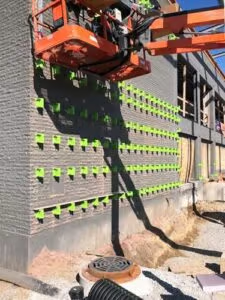
Moisture is a critical concern when retrofitting continuous insulation, as trapped moisture within the building envelope can lead to mold growth, structural damage, and reduced thermal performance. It is essential to consider the placement of vapor barriers, drainage planes, and ventilation strategies when designing a continuous insulation retrofit. Proper detailing around windows, doors, and other penetrations is also crucial to prevent moisture infiltration and condensation issues.
Structural Limitations
Existing buildings may have structural limitations that affect the feasibility and design of a continuous insulation retrofit. For example, adding insulation to the exterior of a building may increase the overall weight, which could exceed the structure’s load-bearing capacity. Additionally, some buildings may have limited space for adding insulation.
Compatibility with Existing Systems
Retrofitting continuous insulation requires careful consideration of how the new insulation system will interact with existing building components, such as cladding, roofing, and mechanical systems. Incompatibility between materials or improper installation can lead to premature failure or reduced performance of the continuous insulation system. It is crucial to select appropriate materials and installation methods that work seamlessly with the existing structure.
Building Code Compliance
Building codes and energy efficiency standards have evolved significantly over time, and older buildings may not meet current requirements. Retrofitting continuous insulation can help bring a structure up to code. Professionals must carefully review local and regional building codes to ensure compliance throughout the retrofit process.
Cost and Budget Constraints
Lastly, cost and budget constraints can pose significant challenges in retrofitting continuous insulation. Factors such as labor, materials, and potential modifications to the existing structure can drive up project costs. The return on investment (ROI) through energy savings and improved occupant comfort should be considered when evaluating the feasibility of a continuous insulation retrofit. Proper planning, material selection, and installation methods can help to minimize costs and maximize the long-term benefits of continuous insulation.
Measuring Up to Building Performance Standards
In recent years, advancements in continuous insulation systems have made it possible to achieve higher levels of energy efficiency and building performance. One such innovative solution is the GreenGirt CMH Delta Adjustable continuous insulation system. This section will discuss the benefits of this versatile continuous insulation system, how it overcomes retrofitting challenges, and best practices for efficient installation.
Latest Advancements: GreenGirt CMH Delta Adjustable Continuous Insulation System

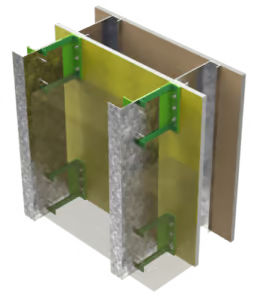
The GreenGirt CMH Delta Adjustable continuous insulation system is designed to provide a high-performance, best-practice, thermally efficient building envelope solution. This system incorporates adjustable composite metal hybrid base brackets paired with metal or CMH rails or clips, that allow for adjustability and easy installation on uneven surfaces and varying substrates, making it an ideal solution for retrofitting existing buildings. Its design also addresses moisture management and thermal bridging, ensuring a durable and energy-efficient building envelope. The adjustable base brackets and rails serve as primary support for the insulation material and cladding attachment, ensuring a continuous insulation layer across the entire building envelope.
Versatile Solution for Retrofitting Existing Buildings

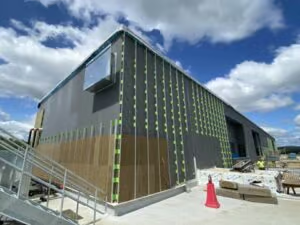
GreenGirt CMH Delta Adjustable offers a versatile solution for overcoming many of the challenges associated with retrofitting existing structures. By addressing the following issues, this system ensures a successful retrofit:
- Varying substrates: The adjustable base brackets can accommodate a wide range of substrates, ensuring a consistent and secure installation across different materials.
- Uneven walls and plane deviations: The adjustable nature of the girts allows for easy alignment and leveling, simplifying the installation process on uneven surfaces.
- Moisture management: GreenGirt CMH Delta Adjustable eliminates thermal bridging which can cause condensation within the building envelope. It can also be combined with appropriate vapor barrier materials. This helps control the diffusion of moisture through the wall assembly and minimizes condensation risks.
- Structural limitations: GreenGirt CMH Delta Adjustable consists of a composite metal hybrid (CMH) material that combines the structural strength of steel with the lightweight feature of composite. The design of the GreenGirt CMH Delta Adjustable system minimizes additional structural loads, making it suitable for buildings with load-bearing constraints.
- Compatibility with existing systems: The system’s adaptability ensures seamless integration with existing cladding, roofing, or additional building envelope systems.
- Building code compliance: By enhancing thermal performance and meeting energy efficiency requirements, GreenGirt CMH Delta Adjustable helps bring buildings up to code.
- Cost and budget constraints: The adjustable base brackets and rails within the GreenGirt CMH Delta Adjustable system simplifies the installation process, reducing labor costs by accommodating uneven walls and plane deviations without the need for extensive surface preparation and leveling. In addition, GreenGirt CMH Delta Adjustable can work with a wide range of substrates, while the composition minimizes the need for additional materials, lowering overall project costs. Lastly, the durable design of GreenGirt CMH Delta Adjustable ensures long-lasting performance with minimal maintenance costs.
Conclusion
By addressing these challenges and following best practices, the GreenGirt CMH Delta Adjustable continuous insulation system provides a comprehensive solution for retrofitting existing buildings, ensuring they measure up to modern building performance standards. This innovative system not only improves energy efficiency and occupant comfort but also contributes to a more sustainable and resilient built environment.
Get Support on Designing Continuous Insulation for Your Retrofit Project
Designing with uneven substrates, moisture risk, or structural constraints? Share your project’s details and performance requirements, and we will help you discover the best continuous insulation solution for your project.
Connect with Your Territory Representative
Related Resources:
View the GreenGirt CMH Delta™ Adjustable System
A2P’s Continuous Insulation Z-Girt Product Selector Tool
–
–
Frequently Asked Questions
What are the biggest problems with adding continuous insulation to an existing building?
Retrofitting continuous insulation can be challenging because existing buildings often have mixed substrates (brick, concrete, metal/wood studs), uneven walls/plane deviations, moisture management needs, structural limitations (added weight or limited space), compatibility issues with existing cladding/roofing/mechanical systems, code compliance requirements, and cost/budget constraints.
How do you install continuous insulation on an uneven wall?
Uneven walls and plane deviations are common in older buildings and can complicate creating a continuous insulation layer. The optimal solution is to install the GreenGirt CMH Delta™ Adjustable, a composite metal hybrid system that uses adjustable composite metal hybrid base brackets paired with rails or clips so installers can align/level the attachment plane and install over uneven surfaces and varying substrates.
How do you reduce condensation risk when retrofitting continuous insulation?
Trapped moisture can cause mold, damage, and reduced thermal performance, so retrofit designs should address vapor barrier placement, drainage planes, ventilation strategies, and detailing around penetrations. GreenGirt CMH Delta Adjustable eliminates thermal bridging (which can drive condensation) and can be combined with appropriate vapor barrier materials to help control moisture diffusion and minimize condensation risk.