








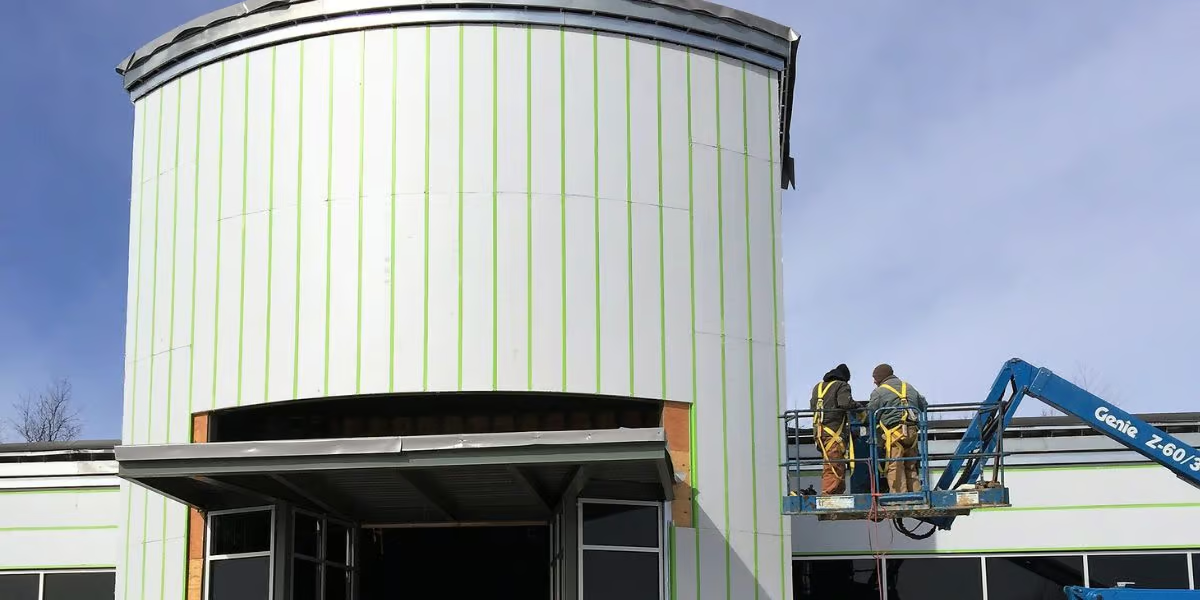
Moisture infiltration poses one of construction’s most persistent and costly challenges, compromising structural integrity and overall energy efficiency. Water intrusion accelerates material degradation, promotes mold growth, and leads to premature building failure, with consequences leading to expensive repairs to fix the wall assembly and other affected areas throughout the building. While rainscreen system technology has emerged as the industry’s gold standard for moisture management, its effectiveness depends entirely on proper system design and component integration.
A rainscreen assembly lacking any one of six critical elements will fail to deliver its protective function, leaving structures vulnerable to the moisture damage it was meant to prevent. This article examines these six fundamental components required for optimal rainscreen performance, demonstrating how advanced continuous insulation systems – specifically the GreenGirt CMH™ continuous insulation and SMARTci® building enclosure systems – provide the essential framework for achieving superior moisture control. By integrating these six components into a rainscreen system, design professionals can deliver wall assemblies that exceed performance standards for moisture management, thermal efficiency, and structural durability.
What is a Rainscreen System?
According to the Rainscreen Association in North America (RAINA), “A rainscreen is defined as an assembly applied to an exterior wall which consists of, at minimum, an outer layer, an inner layer, and a cavity between them sufficient for the passive removal of liquid water and water vapor.” Rainscreens allow any trapped water to drain or evaporate, protecting the wall assembly from rot, mold, and water damage. This ventilated wall assembly functions as both a drainage plane and a pressure-equalization chamber, fundamentally transforming how modern structures manage moisture and thermal loads.
The physics underlying rainscreen performance operates on several interconnected principles. The established air gap develops a convective airflow by creating a continuous drying mechanism that actively prevents the accumulation of water within the wall assembly, preventing structural deterioration, fungal growth, and compromised indoor air quality. The continuous evolution toward rainscreen construction reflects a broader understanding of building physics and the complex interactions between moisture, air, heat, and vapor within wall assemblies. As performance requirements continue to intensify through energy codes, resilience standards, and occupant health considerations, rainscreen technology stands as an indispensable solution for creating durable, efficient, and healthy built environments that can withstand the challenges of changing climates and increasing performance demands.
The Rainscreen Wall Checklist
Outer Cladding Material
The building’s cladding material provides the aesthetic finish and primary weather protection, ranging from fiber cement and metal panels to terra cotta and stone materials. Cladding is a building’s first line of defense against moisture, and should be chosen based on the building’s climate zone and local environment for optimal performance.
Sub-Framing
The building’s sub-framing is a structural system of brackets, rails, fasteners, and accessories that serves as the framework for the outer cladding material. It is the base for maintaining proper durability and structural integrity, ensuring that the exterior cladding has a stable baseline no matter if the cladding is a light- or heavy-weight material. Sub-framing acts as a fundamental support matrix, whether constructed from wood framing, steel studs, concrete masonry units, or reinforced concrete.
Air Gap or Cavity
The air gap/cavity is a ventilated space behind the cladding that helps manage moisture and promotes drainage and drying of wall assemblies. It represents one of the most critical, yet often underappreciated, components of a rainscreen system. The air gap functions as the primary mechanism for moisture management through pressure equalization, drainage, and evaporative drying through continuous airflow. The cavity depth – usually ranging from 3/8 inch minimum to 1 inch for optimal performance – must be maintained consistently across the wall assembly with properly designed ventilation openings at the top and bottom to create natural air circulation driven by thermal buoyancy and wind pressure.
This air space allows gravity drainage of any water that penetrates the cladding while promoting continuous drying of both the cladding’s back surface and the water-resistive barrier, preventing moisture accumulation that could lead to material degradation, mold growth, or structural damage. Without an adequate, unobstructed cavity with proper ventilation accessories, the rainscreen system loses its fundamental ability to manage moisture dynamically.
Continuous Exterior Insulation
Continuous exterior insulation creates an uninterrupted thermal barrier that maintains consistent temperatures across the wall assembly, preventing thermal bridging and differential movement that can compromise system integrity. This outer layer of insulation is capable of handling moisture and drying without degrading or reducing the insulation’s R-value.
It is important to select a continuous insulation system built to prevent moisture penetration and damage. The SMARTci building enclosure system integrates GreenGirt CMH Z-girts with custom-profiled rigid insulation to create an air- and water-tight barrier that prevents moisture damage and keeps the exterior insulation dry. Additionally, the system is designed with composite metal hybrid technology to maintain the structural integrity and thermal efficiency of the building without compromising on overall building envelope performance.
When specifying continuous insulation, priority should be given to attachment and sub-framing systems that minimize thermal bridging and thermal flanking, as steel-based systems can notably reduce overall thermal performance due to their high conductivity.
Air & Water-Resistive Barrier
The air- and water-resistive barrier (often integrated into the same membrane) serves as the secondary defense against water infiltration while controlling air leakage, minimizing the need for additional heating and cooling materials long-term. The WRB is attached directly to the building’s substrate and supports the exterior layers in front of it.
Ventilation and Drainage Accessories
Ventilation and drainage accessories, including perforated flashings, bug screens, and moisture-diverting components, ensure that the air cavity remains functional throughout the building’s lifetime, preventing blockages that could compromise performance.
The absence of any single component fundamentally undermines the rainscreen’s capacity to deliver its intended performance benefits. Without proper ventilation accessories, moisture becomes trapped, negating the system’s primary advantage. Missing or improperly installed WRB layers create pathways for water infiltration that can cause catastrophic damage over time. Inadequate attachment systems may result in cladding failure under wind loads, while compromised continuous insulation creates thermal bridges that foster condensation and energy loss. Each element must be correctly specified, detailed, and installed according to manufacturer specifications and building science principles to achieve the level of performance that modern building codes increasingly mandate.
Conclusion
The six essential components of an effective rainscreen system – outer cladding, sub-framing, air cavity, continuous insulation, air and water-resistive barriers, and ventilation accessories – work in tandem to create a comprehensive moisture management solution. Each element plays an indispensable role in maintaining a building envelope’s structural integrity, and the failure of any single component can compromise the entire assembly’s performance. As building codes evolve to demand higher standards of energy efficiency and resilience, properly designed rainscreen systems have transitioned from best practice to essential requirement.
Advanced continuous insulation systems like GreenGirt CMH and SMARTci demonstrate how modern technology can bridge these critical components into cohesive assemblies that deliver exceptional moisture control, thermal performance, and long-term durability. By understanding and implementing all six rainscreen fundamentals, design professionals can create wall assemblies that protect buildings from moisture damage while optimizing energy performance, ensuring buildings remain healthy, efficient, and resilient for decades to come.
Get Expert Education on the Best Continuous Insulation Z-Girts for Your Project
A2P’s 60-minute, AIA-accredited presentation, “Selecting Continuous Insulation Z-Girts to Meet Today’s Building Codes,” will help you understand the impacts different Z-girt materials have on the overall performance of a building envelope. Earn AIA credits while learning which Z-girt material is best fit for your projects.
Schedule an In-Person or Virtual AIA Presentation Today
Already designing a project with a rainscreen? Our expert engineers are available to assist in proper continuous insulation design with our GreenGirt CMH and SMARTci systems.
Related Resources:
GreenGirt CMH Systems Overview
Read “How GreenGirt CMH & SMARTci Systems Transform Rainscreen Performance”
–
–
Frequently Asked Questions
What are the main components of a rainscreen wall assembly?
A properly designed rainscreen wall assembly includes six essential components: outer cladding, sub-framing (attachment system), air gap/cavity, continuous exterior insulation, air & water-resistive barrier (WRB), and ventilation/drainage accessories. Missing any one of these parts can undermine rainscreen performance and increase risk of moisture damage.
What does the air gap in a rainscreen do?
The air gap is the ventilated space behind the cladding and in front of the WRB. It helps manage moisture by allowing trapped water to drain or evaporate, and it supports drying by creating convective airflow. The air gap also functions as a drainage plane and a pressure-equalization chamber, helping protect the wall from rot, mold, and water damage.
How do you keep continuous exterior insulation from getting wet in a rainscreen wall?
Continuous exterior insulation should be able to handle moisture and drying without degrading or losing R-value. Select a continuous insulation system built to prevent moisture penetration. The SMARTci building enclosure system, which integrates GreenGirt CMH Z-girts with custom-profiled rigid insulation to create an air- and water-tight barrier, helps prevent moisture damage and keeps exterior insulation dry.