








Environmental Product Declarations (EPDs) have become integral in offering valuable insights into the environmental impact of materials and products throughout their lifecycle. For architects, grasping what an EPD truly represents—and knowing how to discern credible from questionable claims—is crucial.
This article covers what an EPD entails, ways for architects to navigate what an EPD consists of, and how Advanced Architectural Products ensures the EPD status of the GreenGirt CMH™ continuous insulation and SMARTci® building enclosure systems.
Understanding Environmental Product Declarations (EPDs)
EPDs quantify environmental impacts including greenhouse gas emissions, energy usage, water consumption, and waste generation. They conform to standardized methods under the International Standards Organization guidelines (ISO 14025). However, not all EPDs are created equal, and architects must differentiate among:
- Verified EPDs: Independently third-party reviewed and the most credible.
- Registered EPDs: Verified and formally registered, offering additional assurance due to institutional oversight.
- Self-declared EPDs: Lack independent verification, raising questions about their reliability.
Risks of Misinterpreting EPDs
Failure to understand the nuances of different EPD types can expose architects to several risks:
- Reduced Credibility: Relying on self-declared EPDs without verification may compromise a project’s perceived sustainability and integrity.
- Regulatory and Compliance Issues: Misunderstanding or misrepresentation could lead to non-compliance with environmental standards and guidelines.
- Project Compromise: Inaccurate assessments may undermine sustainability goals, affecting client satisfaction and marketability
Recommendations for Architects
To effectively interpret and utilize EPDs, architects should:
- Clarify the Type of EPD:
- Always verify if an EPD is third-party verified, registered, or self-declared.
- Prioritize products with verified or registered EPDs to ensure reliability and authenticity.
- Review Documentation Thoroughly:
- Go beyond marketing claims—carefully examine the detailed reports provided in EPD documents to ensure comprehensive understanding.
- Engage with Knowledgeable Suppliers:
- Partner with manufacturers and suppliers who clearly communicate and explain their EPD status and provide detailed product lifecycle insights.
- Educate Internal Teams:
- Ensure all team members, from design staff to specification writers, clearly understand EPD nuances and implications.
- Promote Transparency:
- Advocate within the industry for clearer labeling and greater transparency from manufacturers regarding EPD claims.
Advanced Architectural Products: EPDs for GreenGirt CMH and SMARTci

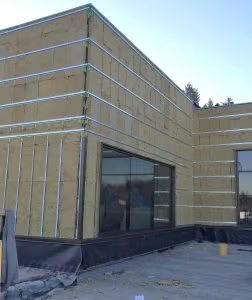
Construction of the Burien Family Health Center in Burien, Washington, which used the GreenGirt CMH Clips™ continuous insulation system on the building’s walls.
At Advanced Architectural Products, we exemplify transparency by prominently displaying verified EPD labels for the GreenGirt CMH™ continuous insulation systems. When engaging with us, you have a clear, reliable understanding of the environmental impacts associated with our continuous insulation and building enclosure solutions, enabling more informed, confident decisions in sustainability-focused projects.
Conclusion
You can hold significant influence in driving sustainable building practices with your future projects. Understanding and effectively interpreting EPDs ensures informed decisions, enhances project credibility, and mitigates risks associated with sustainability claims. By prioritizing verified and registered EPDs and aligning with transparent manufacturers like A2P, you can meaningfully contribute to a more sustainably built environment.
View A2P’s EPDs for GreenGirt CMH Systems
A2P’s EPDs for GreenGirt CMH, GreenGirt CMH XO, and GreenGirt CMH Delta Adjustable are available for download in our Technical Library for easy access and transparency of our manufacturing and materials.
Looking to design with sustainable materials that have a positive environmental impact? Connect with your A2P territory representative today.
Chat with Your A2P Territory Representative
Related Resources:
GreenGirt CMH Systems Overview
A2P’s Sustainability & Environmental Documentation
Read “How GreenGirt CMH and SMARTci Systems Effectively Combat Embodied Carbon”
–
–
Frequently Asked Questions
What is an Environmental Product Declaration (EPD)?
An Environmental Product Declaration (EPD) is a standardized, lifecycle-based document that quantifies a product’s environmental impacts such as greenhouse gas emissions, energy use, water consumption, and waste generation, using methods aligned with ISO 14025 guidelines.
What’s the difference between a verified EPD, a registered EPD, and a self-declared EPD?
A verified EPD is independently reviewed by a third party and is presented as the most credible type. A registered EPD is verified and also formally registered, adding another layer of assurance through institutional oversight. A self-declared EPD does not include independent verification, which can raise reliability concerns. A2P has 3 verified EPDs for its GreenGirt CMH continuous insulation systems.
Do GreenGirt CMH systems have verified EPDs?
Yes. We have verified EPD labels for our GreenGirt CMH systems, supporting transparency that helps teams to make informed sustainability decisions. Our EPDs can be found in our website’s technical library and in the “Downloads” section of our product pages.