








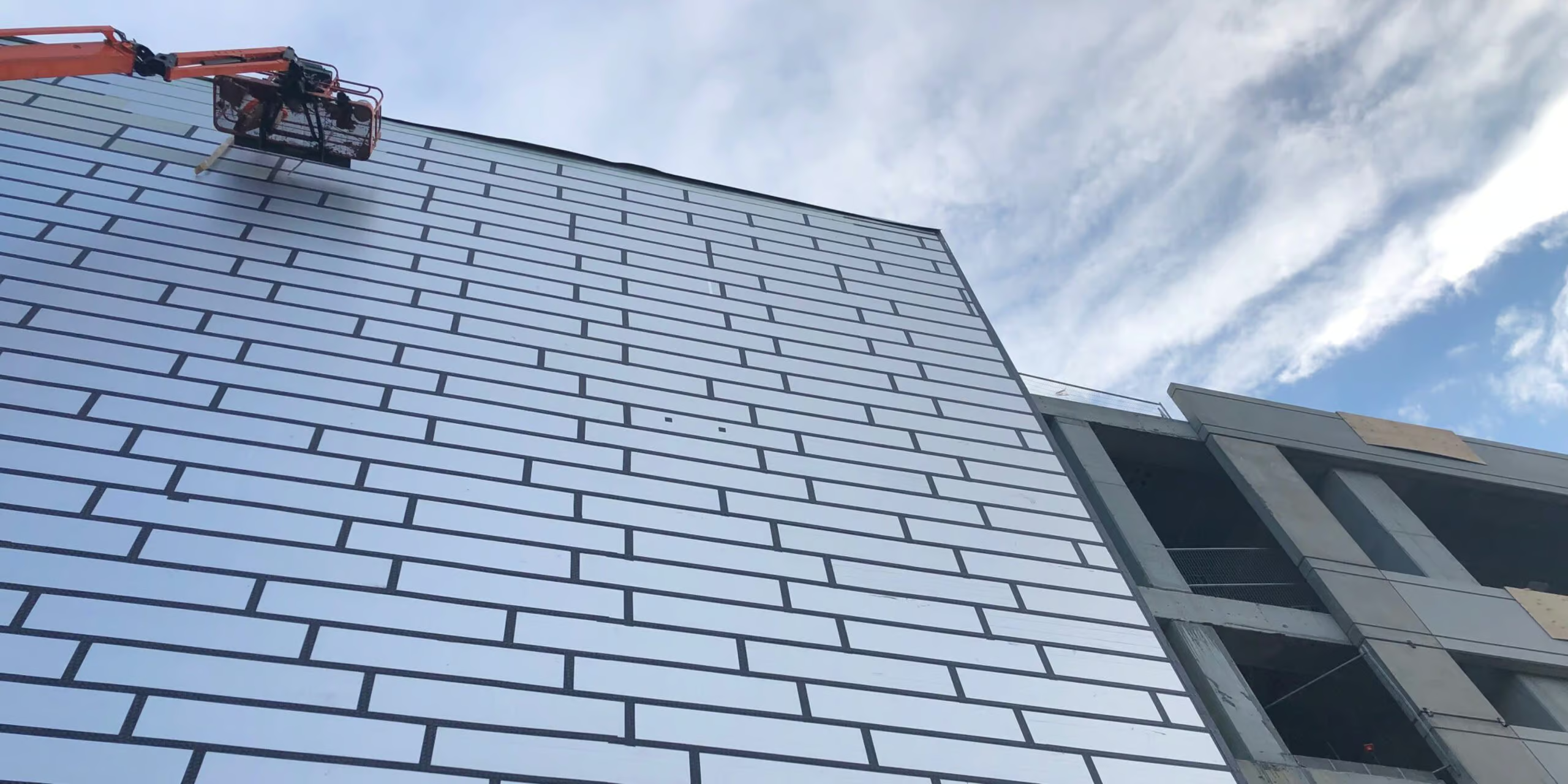
Quick answer: ASHRAE 90.1 sets minimum R-values for walls, roofs, and floors in each of its eight climate zones, with separate targets for continuous insulation and cavity insulation. For most commercial projects, continuous insulation is required on steel-framed walls across most U.S. climate zones, and on mass walls beginning in the cooler zones. Refer to ASHRAE 90.1 Section 5.5 (Envelope Requirements) or the U.S. Department of Energy’s Building Energy Codes Program for the prescriptive minimums; the climate-zone table later in this article lists the continuous insulation minimums for each zone, and the rest of this guide explains how to read those targets against real wall, roof, and floor assemblies.
When it comes to designing efficient and comfortable buildings, insulation is an essential component. Insulation helps regulate temperatures inside the building and cut down on energy costs. But when it comes to insulation, what is R-value, and how does it play a role in commercial buildings? This article will provide a guide for architects looking to understand the concept of insulation R-value and how they can use this knowledge when designing commercial buildings.
R-value measures the ability of a material or construction method to slow down heat transfer from inside and outside the building. A higher level of insulation offers improved thermal performance, resulting in lower energy bills for building owners and greater comfort for building occupants throughout the year. Knowing how to select insulation materials with high R-value ratings will ensure that your projects are as efficient and comfortable as possible.
This article will discuss the basics of insulation R-value, including factors like climate zone, building type, and wall construction techniques that all come into play when selecting materials with the highest possible thermal resistance rating. It will also explain some key principles related to understanding R-value, such as U-values, vapor diffusion precautions, airtightness testing procedures, condensation control measures, and other considerations for architects looking to achieve maximum efficiency for their projects.
By using this information as a base, architects can become confident in their choices when selecting insulation materials for different types of commercial buildings—ensuring maximum comfort levels at minimum expenses for their clients or tenants. With this guide in hand, architects should have all the tools they need to make informed decisions about insulation R-values in commercial buildings. The section that follows explains how ASHRAE 90.1’s prescriptive path applies to commercial walls, roofs, and floors and lists the prescriptive continuous insulation minimums by climate zone, so the principles in the rest of this guide can be read against the values your project actually has to hit.
ASHRAE 90.1 R-Value Requirements by Climate Zone
ASHRAE 90.1 sets minimum envelope performance for commercial buildings, and it does so at the assembly level, not the material level. The prescriptive path uses R-value targets that assume a specific framing and insulation configuration. Most U.S. jurisdictions reference ASHRAE 90.1-2019 or a state-amended version of it. Confirm the version your project is filing against before locking in the values below, because the targets shift between editions.
The table separates continuous insulation minimums on their own; where the standard also requires cavity insulation alongside them, as it does for steel-framed walls, that is noted in the table footnotes.. That distinction matters: the framing factor adjustment behaves differently for each, and stacking the two values in the wrong field on a COMcheck submittal triggers a flag.
For the full prescriptive tables, including roof, floor, and fenestration requirements, refer to ASHRAE 90.1 Section 5.5 (Envelope Requirements) in the edition your jurisdiction has adopted. The U.S. Department of Energy’s Building Energy Codes Program publishes compliance documents and the COMcheck tool that summarize the prescriptive path.
ASHRAE 90.1 continuous insulation by climate zone
The table below shows the prescriptive continuous insulation minimums for non-residential above-grade walls by climate zone. A2P continuous insulation systems apply across all climate zones; specific system sections, continuous insulation thicknesses, and GreenGirt CMH spacing are confirmed by A2P engineering against the assembly and the standard edition the project is filing under.
| Climate Zone | Mass Wall Insulation Minimum R-Value |
Steel-framed Insulation Minimum R-Value |
|---|---|---|
| 1 | No requirement | No requirement |
| 2 | R-5.7a | R-3.8b |
| 3 | R-7.6 | R-5b |
| 4 | R-9.5 | R-7.5b |
| 5 | R-11.4 | R-10b |
| 6 | R-13.3 | R-12.5b |
| 7 | R-15.2 | R-12.5b |
| 8 | R-19 | R-18.8b |
a Exception to Section 5.5.3.2 applies for mass walls above grade.
b R-13 cavity insulation also required.
Data source: ANSI/ASHRAE/IES Standard 90.1-2022, Tables 5.5-1 – 5.5-8.
Values shown are prescriptive minimums for the continuous insulation component from ASHRAE 90.1-2022. Confirm against the version of ASHRAE 90.1 your jurisdiction has adopted.
Where continuous insulation crosses from optional to mandatory
Continuous insulation is not a discretionary line item under 90.1 once a project sits above a certain climate zone. The exact threshold depends on the wall type. For steel-framed walls, continuous insulation is required across most U.S. climate zones under the current prescriptive path (per ASHRAE 90.1 Section 5.5), because the framing factor adjustment for cold-formed steel pushes a cavity-only wall below the assembly target. For mass walls, the requirement begins in cooler zones. For metal building walls, the threshold sits in the mid-zone range. The table above lists continuous insulation minimums for mass and steel-framed walls in each zone; refer to ASHRAE 90.1 Section 5.5 for the remaining assembly types.
The behavior at openings is different. The wall continuous insulation that hits a window jamb has to keep performing across the rough opening if the assembly is going to deliver what it shows on paper. That is the role of the GreenGirt XO continuous insulation system at openings: it carries the continuous insulation line across the opening detail without the load-path and thermal-bridging compromises that strip-and-stud or strap-and-shim detailing forces. For the wall field itself, SMARTci® is the A2P building enclosure system that integrates the continuous insulation, the WRB, and the cladding attachment into one design.
Three compliance traps teams miss at submittal
The first is the framing factor. A steel-framed wall that hits the assembly target on the spec page can miss it after the cold-formed steel framing factor is applied. This is the most common reason a continuous insulation line item gets added late in design development.
The second is the continuous insulation-versus-cavity split. The standard separates the two values because they perform differently. COMcheck and most state-level submittal tools enforce the distinction, and stacking them as a single number is a flag.
The third is the occupancy distinction. ASHRAE 90.1 sets different targets for residential and non-residential occupancies under the same standard, applied to the same physical wall. A mixed-use project that runs one prescriptive value across both occupancies will not pass review.
What is R-value and why does it matter for commercial buildings?
Understanding R-Value in Insulation
R-value is a measure of thermal resistance, which is used to calculate the ability of a material or construction method to slow down heat transfer from inside and outside the building. It is expressed as a numerical value, with a higher R-value representing better insulation performance. The higher the R-value of an insulation material, the more effectively it will reduce energy costs by keeping temperatures consistent within the building. To calculate R-value, divide the insulation’s thickness by its thermal conductivity.
Factors Affecting R-Value Selection
The climate zone, building type, and wall construction techniques all impact the type of insulation material selected for a particular project. For example, the R-value requirements for buildings in colder climates will be higher than in warmer climates, as more insulation is needed to regulate temperatures inside the building to keep energy costs low.
Choosing the Right Insulation for Different Building Types
Maximizing Efficiency with High R-Value Materials
High R-value materials such as foam board, fiberglass batting, and spray foam are specifically designed to maximize resistance to thermal change, resulting in a greater level of insulation. By installing high R-value materials during construction or renovation projects, businesses can significantly reduce their energy costs while maintaining indoor comfort levels throughout the year in commercial buildings.
Additional Benefits of High R-Value Insulation
High R-value insulation can also help mitigate air leakage problems, preventing conditioned air from escaping outside where it doesn’t do any good, as well as preventing outside air from entering a building. In addition, high R-value insulation may help absorb sound waves between rooms in a building—making it quieter and more comfortable for occupants.
The Architect’s Role in Maximizing Efficiency
By considering all these factors, architects can take full advantage of their knowledge and understanding of building design when selecting materials with the highest possible thermal resistance rating. Whether they’re designing a commercial office complex or an industrial building, understanding how R-value affects thermal resistance and how climate zone, building types, and wall construction techniques come into play can help architects make well-informed decisions—ensuring maximum efficiency.


Key Principles to Understanding R-Value
Understanding the basics of insulation and its corresponding R-value is critical to achieving energy efficiency and overall comfort in a building. U-values measure the amount of heat that can escape through materials, with lower U-values representing better insulation performance. The U-value can be found by taking the reciprocal of the R-value (U=1/R).
Airtightness testing procedures are also used to determine the effectiveness of insulation. Airtightness testing measures an enclosure’s air permeability, which helps identify which air leakages may be occurring. This is important as air leakage can reduce the insulation performance of any material—for example, if a wall has poor airtightness, then warm air can escape, or cold air can enter easily, resulting in decreased insulation performance compared to tighter enclosures.
Common Materials Used to Achieve Insulation R-Value
When it comes to insulation materials, there are several different options available that offer varying levels of thermal resistance.
Insulation is an important factor for architects to consider when designing a building, as different types of insulation can have a significant impact on the overall design. Insulation materials with higher R-values, such as polyurethane foam and mineral wool, can help reduce the depth of a building’s walls and ceilings while still offering the same level of thermal protection—this can be beneficial in terms of both space savings and cost savings.
Fiberglass
One of the most common materials used for insulation, fiberglass is valued for its relatively low cost and good thermal performance. It comes in blankets or batt forms, as well as loose-fill, which is often used for attics or hard-to-reach areas. Its R-value ranges between 2.2–4.3 per inch of thickness, depending on installation and form.¹
Cellulose
A type of blown-in insulation, cellulose consists of recycled paper fibers, such as newspaper, cardboard, office paper, and other common waste paper products. Cellulose insulation is typically treated with flame retardants to help improve fire resistance. This type of insulation has an R-value range between 2.9–4.0 per inch, and it tends to be more airtight than fiberglass when installed correctly—this makes it especially suitable for areas where air leakage needs to be minimized.¹
Polyurethane
Polyiso

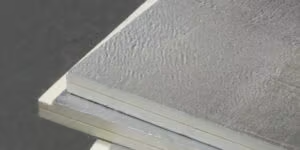
Polyiso insulation, also known as polyisocyanurate foam insulation, offers an R-value per inch of approximately 5.5–7.0, depending on the foam type and density.² Its efficiency makes it one of the most widely used insulation materials in building envelopes. Its effective thermal resistance helps reduce energy costs while also providing additional protection against air infiltration from outside sources. For a phenolic-core continuous insulation system that uses these efficiency characteristics in a structural building envelope, see the GreenGirt CMH™ system.
Extruded Polystyrene
Mineral Wool

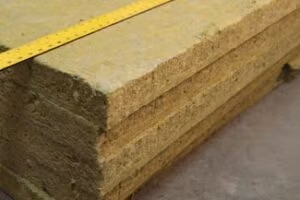
Finally, you can also use mineral wool as an insulation material, which offers performance characteristics similar to fiberglass. Made from natural minerals, mineral wool is spun into fibers or mats and treated with a binder for added durability. Commonly used minerals include glass, basalt, and slag. The resulting material is lightweight yet extremely effective at trapping air pockets, which is what gives it its ability to provide excellent thermal insulation. It is also very fire-resistant and can provide additional soundproofing qualities when installed properly. Mineral wool generally has an R-value between 3.0 – and 4.5 per inch, depending on how thickly it is applied.¹
It is important to note that the R-value is not the only factor to consider when choosing insulation. Other factors include cost, ease of installation, and environmental impact of the material.
Overall, understanding how different types of insulation will affect a building’s design is key to creating a structure that meets both energy efficiency and aesthetic requirements. Architects must choose the most suitable type of insulation for their project, considering factors like location, climate zone, desired R-value, budget constraints, and specific design elements.
Benefits of High R-Value Insulation in Commercial Buildings


As businesses look for ways to reduce their energy costs, the benefits of high R-value insulation in commercial buildings have become increasingly evident. R-value is a measure of thermal resistance, or the ability of a material to slow down heat transfer from inside and outside the building. High R-value insulation helps to reduce energy loss through walls, roofs, and floors, resulting in significant cost savings for building owners.
Installing high R-value insulation is the most effective way to increase thermal resistance. This type of insulation offers superior performance compared to other insulation forms. In addition, high R-value insulation can help control building moisture levels – reducing the risk of mold growth and improving indoor air quality – and provide enhanced soundproofing capabilities.
In addition to cost savings, another advantage of installing high R-value insulation is its ease of installation. Use it to insulate existing walls, ceilings, and new construction projects, making it ideal for renovations or upgrades. The material also offers long-term durability; once installed, it will remain effective for many years with minimal maintenance required.
Finally, another benefit of high R-value insulation is its environmental impact. By reducing energy consumption and improving energy efficiency, these materials help buildings positively contribute toward reducing their carbon footprint and conserving natural resources. In this way, building owners can reduce operating costs while contributing toward a more sustainable future for everyone.
Effective vs. nominal R-value: which one should architects spec?
Nominal R-values represent the manufacturer’s advertised value of the insulation product. On the other hand, effective R-values represent the actual thermal resistance that you can expect to get from your entire construction assembly in real-world conditions. Generally, effective R-values will be lower than nominal values due to certain factors such as air gaps or voids between insulation panels, age, and condition of the insulation. Testing or specific software can determine the effective R-value. Testing will involve measuring the thermal resistance of the complete assembly or its ability to resist heat flow.
For this reason, it is important to understand how nominal vs. effective R-value works so you can make an informed decision when designing with insulation. The nominal value is often what manufacturers base their advertising on, so it may be deceiving compared to actual results. It is also important to note that different types of insulation materials have different levels of efficiency and, therefore, will have different levels of thermal resistance.
The attachment method for the insulation will also play a large role in its effective R-value. Fasteners through the insulation will cause thermal bridges and decrease the overall effectiveness of the insulation—as will other non-thermally efficient attachment methods.
When choosing insulation for your building, it is a good idea to look at both nominal and effective R-values. For example, if you are looking for maximum efficiency, then focus on materials with higher effective values than those with higher nominal values. It is also important to calculate your actual requirements based on weather conditions and local codes.
Conclusion
ASHRAE 90.1 sets the floor for envelope performance, not the ceiling. ASHRAE 90.1’s prescriptive minimums are the values commercial projects must hit, and continuous insulation is what gets a steel-framed wall over that minimum across most U.S. zones. From there, the real spec work is in the assembly: continuous insulation versus cavity split, framing-factor adjustments, occupancy distinctions, and the details where the continuous insulation crosses an opening. Specify against those, and the wall on paper will perform like the wall in the field.
Put R-Values to Work in Your Project’s Wall Assembly
Get submittals, details, drawings, BIM/REVIT files, and spec documents to help you design with GreenGirt and SMARTci systems that retain the insulations nominal R-value.
Download Resources in A2P’s Technical Library
Need additional support? Our expert engineering team is available to support with guidance on effective R-values when designing with GreenGirt and SMARTci systems.
Talk with A2P’s Expert Engineers
Related Resources:
GreenGirt & SMARTci Thermal Performance
Read “A Closer Look at R-Values: How to Calculate and Determine Insulation Efficiency”
A2P’s Portfolio of Solutions for Walls, Windows, and Roofs
Source:
¹ U.S. Department of Energy, Office of Energy Efficiency and Renewable Energy. “Insulation,” Energy Saver. Accessed September 2026.
² Rmax (a Sika company). “16 Benefits of Rigid Foam Polyiso Insulation.” Accessed September 2026.
³ Holladay, Martin. “Thermal Drift of Polyiso and XPS,” Green Building Advisor, June 3, 2016 (updated August 21, 2024). Subscription required.
–
–
Frequently Asked Questions
What is the typical R-value per inch in insulation materials?
Fiberglass is typically R-2.2 to R-4.3 per inch, cellulose R-2.9 to R-4.0 per inch, polyiso ~R-5.5 to R-7.0 per inch, XPS ~R-4.5 to R-5.6 per inch, and mineral wool ~R-3.0 to R-4.5 per inch (ranges vary by product/form and installation).
What’s the difference between R-value and U-value?
R-value describes resistance to heat flow; U-value describes how much heat passes through a material or assembly. The relationship is inverse: U = 1/R (so lower U-values indicate better insulation performance).
What is the difference between nominal vs. effective R-value?
Nominal R-value is the manufacturer’s advertised insulation value. Effective R-value is what the full assembly delivers in real conditions, and it’s often lower due to factors like air gaps/voids, insulation age/condition, and thermal bridging from fasteners/attachment methods; testing or software can be used to determine effective R-value.
When is continuous insulation required by ASHRAE 90.1?
ASHRAE 90.1 requires continuous insulation on steel-framed walls across most U.S. climate zones under the current prescriptive path, because the cold-formed steel framing factor drives a cavity-only wall below the assembly target. For mass walls, continuous insulation is required starting in cooler zones, and for metal building walls the threshold sits in the mid-zone range. Mass and steel-framed wall minimums are listed in the climate-zone table above.
What is the difference between continuous insulation and cavity R-value?
Continuous insulation is installed outboard of the framing, with no thermal bridge interrupting it. Cavity insulation is installed between framing members (studs, joists, or girts) and is interrupted by the framing itself, so it is derated by a framing factor. ASHRAE 90.1 separates the two values because they perform differently in the assembly, and COMcheck and most state-level submittal tools enforce that distinction.
What climate zone am I in under ASHRAE 90.1?
ASHRAE 90.1 defines eight numbered climate zones (0 through 8) based on heating and cooling degree days. Most U.S. counties are mapped to a zone in ASHRAE 169 and reproduced in the energy code your jurisdiction has adopted. Check your state or local energy code amendment to confirm which version of 90.1 (and which county-to-zone map) governs your project.
Does ASHRAE 90.1 apply to my project?
ASHRAE 90.1 applies to most commercial and high-rise residential buildings in jurisdictions that have adopted it directly or via state energy code. Low-rise residential is typically governed by the IECC residential provisions instead. If your jurisdiction has adopted 90.1 (or the IECC commercial provisions, which reference 90.1), the envelope targets above apply to your project.
How do I find the R-value requirement for my climate zone?
Refer to ASHRAE 90.1 Section 5.5 (Envelope Requirements) or the climate-zone tables in the version of the standard your jurisdiction has adopted. The U.S. Department of Energy’s Building Energy Codes Program (energycodes.gov) and the COMcheck compliance tool both summarize the same prescriptive path. The climate-zone table earlier in this article lists the continuous insulation minimums for mass and steel-framed walls in each zone; A2P continuous insulation systems apply across all climate zones, with specific system selections confirmed by A2P engineering. Confirm the version of ASHRAE 90.1 your jurisdiction has adopted before locking in values, because the targets shift between editions.