







Why "steel-like" connection details cause unavoidable failure in FRP

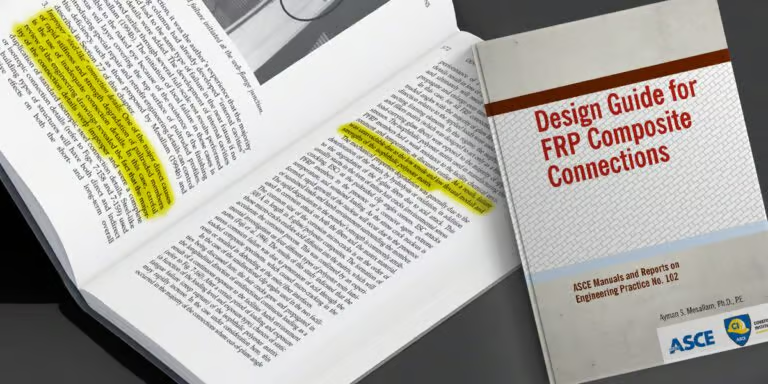
The ASCE Design Guide for FRP Composite Connections on page 371, item 3, states that using sheetmetal screws for connections results in “unavoidable failure,” as follows:
“Improper ‘steel-like’ connection details: One of the major direct causes of rapid stiffness and strength degradation of pultruded members is the use of inadequate connection details. In this case, careful review of the engineering drawings revealed the fact that the majority of the connection details were improper… As a result, failure was unavoidable due to the low tensile and low flexural moduli and strengths of the isophthalic matrix.”
— ASCE Design Guide for FRP Composite Connections, page 371-3
GreenGirt CMH and SMARTci are made of composite metal hybrid materials to leverage the best properties of both metal and fiberglass – thereby eliminating the concerns of FRP-only products.
Frequently Asked Questions (FAQs)
Yes. The ASCE Design Guide for FRP Composite Connections says that using sheet metal screws for FRP connections can result in “unavoidable failure,” specifically tied to improper “steel-like” connection detailing in pultruded FRP members.
ASCE guidance points to inadequate connection details, especially improper “steel-like” connection details, as a major direct cause of rapid stiffness and strength degradation in pultruded FRP members.
According to ASCE, failure is described as “unavoidable” because of FRP material limitations, specifically the low tensile and low flexural moduli and strengths of the isophthalic matrix when paired with improper connection details.