







How drilling holes in FRP creates failure initiation points

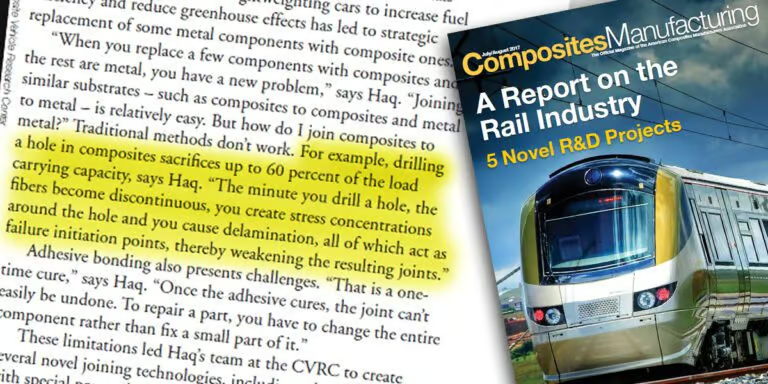
Page 15 of the July/August issue of Composites Manufacturing Magazine states that drilling a hole [in FRP] leads to failure initiation points and weakened joints, as follows:
“Drilling a hole in composites sacrifices up to 60 percent of the load carrying capacity. The minute you drill a hole, the fibers become discontinuous, you create stress concentrations around the hole, and you cause delamination, all of which act as failure initiation points, thereby weakening the resulting joints.”
— Composites Manufacturing Magazine, July/August 2017, page 15
GreenGirt CMH and SMARTci are made of composite metal hybrid materials to leverage the best properties of both metal and fiberglass – thereby eliminating the concerns of FRP-only products.
Frequently Asked Questions (FAQs)
Yes. Composite Manufacturing Magazine states that drilling a hole in composites can sacrifice up to 60% of the load-carrying capacity and can weaken the resulting joints.
Drilling holes makes the fibers discontinuous, creates stress concentrations around the hole, and can cause delamination, conditions that act as failure initiation points and weaken the joint.
GreenGirt CMH and SMARTci are made from composite metal hybrid materials (combining steel and composite fiberglass) to leverage the best properties of both, thereby eliminating the concerns of FRP-only products, as stated on the page.