







The pursuit of aesthetic excellence in architectural design often intersects with the demand for superior thermal performance. For example, shadow lines at window frames offer architects a sophisticated design element that may enhance visual appeal by recessing windows deep into the wall assembly, but compromise the building’s performance by inviting heat flow that could significantly increase the cost of heating and cooling the building, forcing architects to choose between architectural vision and energy efficiency. As energy codes tighten and owners increasingly scrutinize long-term operational costs, thermal efficiency at window frames is no longer a design preference, but a technical and financial imperative.
Shadow lines have long been valued for the depth and visual sophistication they bring to a building’s façade. But when the pursuit of dramatic shadow line expression compromises a window assembly’s thermal performance, it costs building owners significant amounts in energy loss, increased HVAC load, and reduced envelope integrity. This article examines why thermal performance must lead the design conversation at window assemblies, and how the GreenGirt CMH XO™ structural thermal framing system enables architects to meet that standard while still achieving modest shadow line expression depending on the cladding materials specified.
What are Shadow Lines?

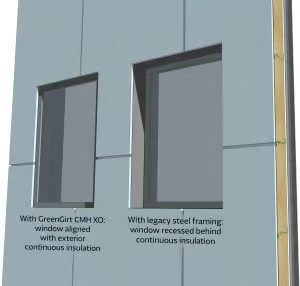
On the left: a window with GreenGirt CMH XO installed to prioritize thermal alignment of the window frame and the continuous insulation layer. On the right: a recessed window with a legacy framing system installed to achieve deeper shadow lines, but is ultimately less thermally efficient.
Shadow lines are created when windows are recessed deep into a wall cavity, causing the surrounding wall thickness to cast distinct linear shadows across the façade, an effect some designers appreciate for its modern, refined aesthetic. Architects favor this design approach for its ability to enhance visual interest and architectural sophistication on building exteriors. Shadow lines introduce dimensionality to facades, articulate window profiles, and contribute to the enduring visual quality of structures.
By strategically directing how natural light interacts with window assemblies, shadow lines produce crisp, well-defined edges that transform windows into architectural focal points. While shadow lines offer genuine aesthetic value, their implementation must be carefully evaluated against the thermal consequences they can introduce if not properly detailed.
The Thermal Cost of Prioritizing Shadow Lines

A building façade with recessed windows to achieve a shadow line effect, and insulation sits farther forward by several inches.
When shadow line depth is pursued at the expense of thermal plane alignment, architects are effectively trading long-term building performance for a short-term aesthetic outcome. This is a tradeoff that increasingly stringent energy standards – including ASHRAE 90.1-2022 – make difficult to justify. The responsible approach is to establish thermal performance as the non-negotiable baseline, and then evaluate which aesthetic objectives can be achieved within that framework.
Cladding material selection plays a meaningful role here. Thicker cladding materials, such as brick, naturally add depth to the wall assembly surrounding windows, creating more pronounced shadow lines while supporting thermal plane alignment, provided the right structural framing system is in place. Thinner cladding options will produce a subtler shadow line effect. In either case, the thermal performance of the window assembly should drive the specification decision, with shadow line expression as a secondary consideration shaped by the cladding.
GreenGirt CMH XO: Combine Aesthetics & Performance

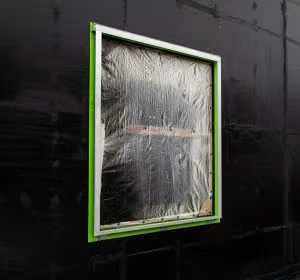
GreenGirt CMH XO is a structural thermal framing system that brings windows forward to align with the exterior continuous insulation layer, reducing thermal bridging while acknowledging the tradeoff of diminished shadow lines, though modest shadow lines can still be achieved when cladding of sufficient thickness extends proud of the window frame.
Important performance benefits of GreenGirt CMH XO include:
- Doubling Thermal Efficiency: While legacy wood and metal framing systems typically achieve only 45% thermal efficiency, GreenGirt CMH XO achieves up to 97% thermal efficiency, exceeding compliance expectations of ASHRAE 90.1-2022.
- Eliminating Thermal Bridging: The system replaces metal angles and wood blocking with continuous composite metal hybrid (CMH) materials, significantly improving thermal efficiency and sustainability at windows and openings.
- Superior Structural Durability: Using a CMH design eliminates concerns of fastener creep and fatigue, ensuring lasting structural integrity throughout the lifetime of the building.
- Design Flexibility: GreenGirt CMH XO accommodates diverse window configurations, including punched openings, storefronts, small curtainwall punched openings, and ribbon windows, securing energy efficiency and aesthetic shadow lines for any window type necessary for the building’s design.

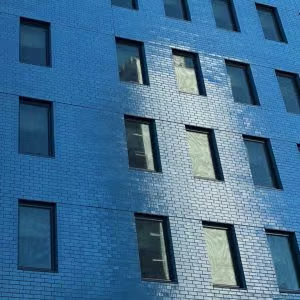
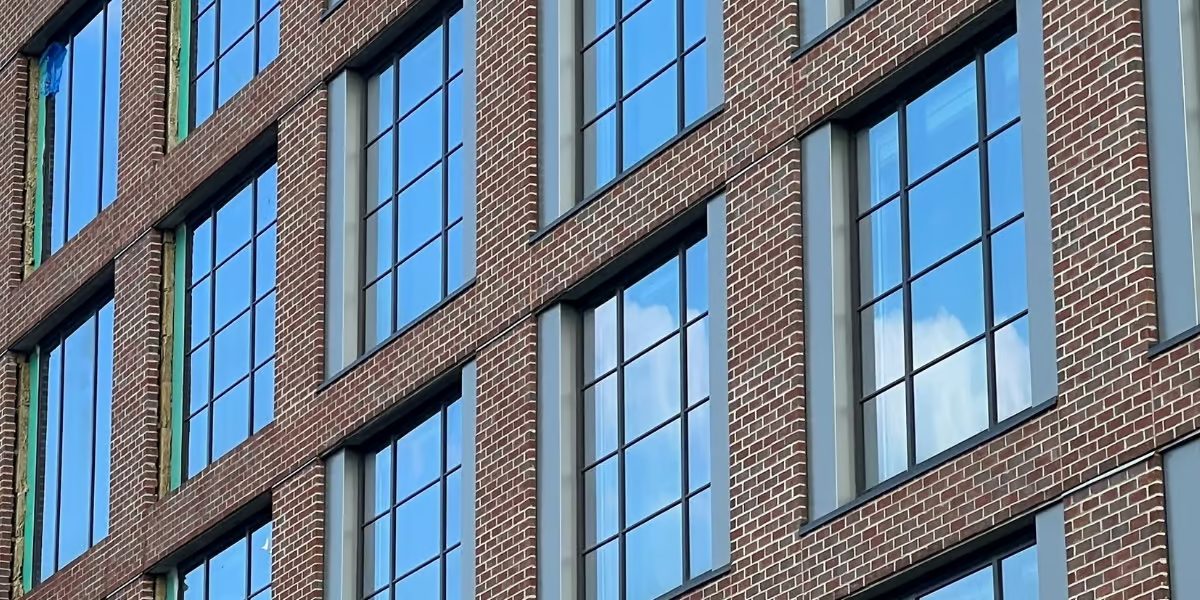
The completed Sutphin Senior Residence Center in Queens, NY, which installed GreenGirt CMH XO around the building’s windows, demonstrating aesthetic shadow lines with thicker cladding materials.
The Sutphin Senior Residence Center in Queens, NY installed GreenGirt CMH XO at a 4” depth to ensure energy efficiency throughout the building’s walls and windows. Using mineral wool insulation and brick cladding, this project achieved compelling shadow lines at window frames without compromising overall thermal performance. The brick cladding perimeter depth around the windows allowed the thermal plane of the window to align with the thermal plane of the continuous insulation while achieving a distinguished façade that elevates the appearance of the building’s exterior.
Conclusion
As energy codes grow more demanding and building owners place greater emphasis on lifecycle cost performance, thermal efficiency at window assemblies must be the architect’s first priority. Shadow lines remain a valuable design tool, but their role in the specification process should follow – not lead – the thermal and structural requirements of the project.
GreenGirt CMH XO was engineered to meet this standard. With up to 97% thermal efficiency and a design that eliminates thermal bridging at windows and openings, the system gives architects a reliable path to code compliance and envelope performance. And for projects where cladding materials support it, modest shadow line expression remains achievable without compromising the performance that owners and energy standards demand.
By establishing thermal performance as the foundation of window assembly design, architects can deliver buildings that meet today’s efficiency expectations while still expressing the architectural quality their clients expect.
Design Thermally-Efficient Windows with GreenGirt CMH XO
Have a project coming up that would benefit from the thermal performance of GreenGirt CMH XO? Connect with your A2P territory representative to request a quote.
Related Resources:
GreenGirt CMH XO System Components & Performance Data
Download GreenGirt CMH Specs, Details, Drawings, BIM/REVIT Files, & More
Read “Framing the Future: The GreenGirt CMH XO Solution”
–
–
Frequently Asked Questions
What is a shadow line on a building exterior?
A shadow line is an intentional recess between a window frame and the surrounding wall cladding that creates a visible gap and crisp linear definition on a building’s façade. Architects use shadow lines to add depth and visual interest to exterior walls, making windows read as deliberate architectural features rather than flat openings. While shadow lines are a valued design tool, how they are detailed has a direct impact on the building envelope’s thermal performance.
Do shadow line details reduce energy performance or create thermal bridging?
If the shadow line is detailed without a proper structural window framing system, the building’s energy performance can be reduced, and thermal bridging can occur.
How does GreenGirt CMH XO reduce thermal bridging at windows?
GreenGirt CMH XO is a structural thermal framing system that replaces legacy framing systems that invite thermal bridging with a continuous composite metal hybrid (CMH) design. This maintains thermal plane alignment between the window and the continuous insulation layer, achieving up to 97% thermal efficiency compared to the 45% typically delivered by legacy framing systems. The result is a window assembly that meets and exceeds ASHRAE 90.1-2022 energy code requirements while supporting long-term envelope performance.