








Energy efficiency is essential for reducing energy use and operating costs in traffic-heavy buildings such as airports. With large interior volumes, long operating hours, and constant exterior exposure, airport terminals can experience significant heating and cooling loads when the enclosure allows heat to move freely through the wall assembly. High-performance continuous insulation helps to eliminate thermal bridging and improve effective R-value across the commercial building envelope, securing energy-efficient airports across the country. The GreenGirt CMH™ and GreenGirt Steel™ continuous insulation systems, and the SMARTci® building enclosure system deliver the thermal performance needed to cut energy loss at the building envelope and support long-term energy savings, even under extreme climate conditions.
This article highlights five successful airport expansion projects that utilized GreenGirt and SMARTci systems to strengthen the enclosure and prioritize energy performance, helping owners and operators reduce heating and cooling demand while maintaining consistent, thermal control.
Gerald R. Ford International Airport Terminal Expansion

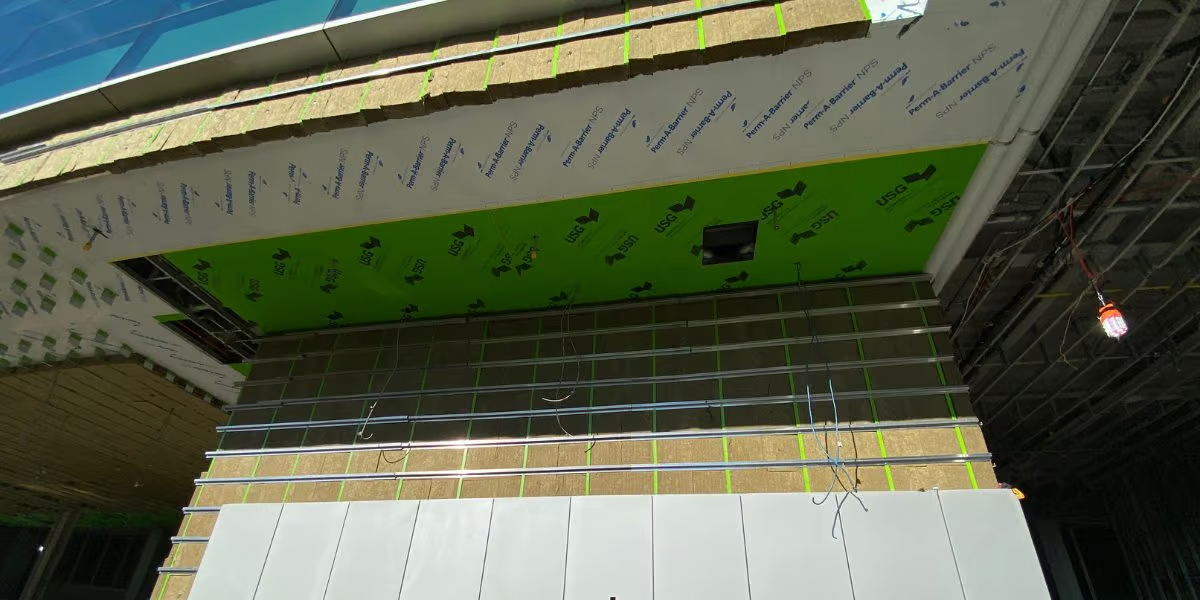
The construction of the Gerald R. Ford International Airport Terminal Expansion project in Grand Rapids, MI, which installed the GreenGirt CMH continuous insulation system on the terminal’s walls.
As part of the Gerald R. Ford International Airport elevation project in Grand Rapids, Michigan, its terminal has been expanded to include modernized technology and efficiency to keep up with growth and advancement across the airline industry.
To support energy efficiency and sustainable construction in this expanded section of the airport, GreenGirt CMH was installed horizontally on the terminal’s walls at 1.5” deep and 24” on center, with mineral wool insulation and a combination of metal panels, MCM panels, terracotta, and ACM cladding materials. This expansion not only eliminates thermal bridging in the building envelope, but also supports lower heating/cooling demand through high thermal performance by using the GreenGirt CMH system.
La Guardia International Airport

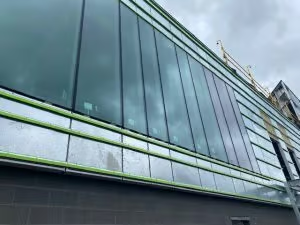
Construction of the La Guardia International Airport Terminal B project in Elmhurst, New York, which installed the GreenGirt CMH and GreenGirt CMH Delta Adjustable continuous insulation systems on the building’s walls.
The La Guardia International Airport Terminal B project in Elmhurst, New York, was the construction of a new, modernized terminal, complete with newly constructed gates, concourses, and skybridges. In addition, the new Terminal B includes an upgraded gateway, parking garage, and connectivity throughout the building for an overall seamless and stress-free experience.
Energy efficiency in airport terminals is essential, and to secure maximum levels while lowering utility costs, the GreenGirt CMH continuous insulation system and the GreenGirt CMH Delta Adjustable™ system were installed on the building’s walls at 5” deep and 16” on center, with mineral wool insulation and metal panel cladding. In addition, the GreenGirt CMH system was installed in other areas of La Guardia throughout the modernization of this airport to improve its overall energy efficiency.
Statesville Airport

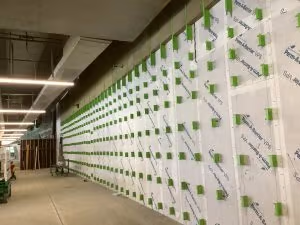
The construction of the Statesville Airport project in North Carolina, which installed the SMARTci building enclosure system on closed framing on the building’s walls.
The Statesville Airport in North Carolina is upgrading its terminal to modernize the patron experience, while also increasing energy efficiency throughout the building. The project’s objective is to improve passenger traffic, upgrade essential services, and integrate modern facilities that increase efficiency throughout the terminal.
To prioritize energy performance by controlling heat flow into and out of the building, the SMARTci system was installed horizontally on closed framing using the GreenGirt Optima CMH Z-girts at 1.5” deep and 24” on center with metal plate cladding and polyiso insulation. A tighter, more thermally efficient building envelope supports long-term energy savings for constant airport operations.
O’Hare International Airport

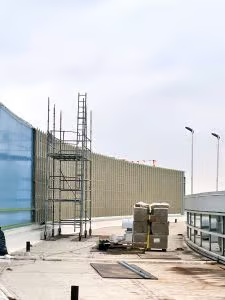
The construction of the O’Hare International Airport project in Chicago, Illinois, which installed the GreenGirt CMH continuous insulation system on the terminal’s walls.
The O’Hare International Airport in Chicago, Illinois, is undergoing a massive expansion to modernize terminals, add new concourses, and improve operational efficiency. New lounges, amenities, and gates will be installed, as well as the O’Hare Global Terminal, encouraging more effective international travel in the Chicago area. Major areas of the O’Hare Airport have achieved LEED certification, keeping the airport accountable for environmental sustainability through energy-efficient systems.
To secure the walls of this expansion with energy-efficiency and eliminate thermal bridging, while maintaining LEED certification expectations, the GreenGirt CMH system was installed horizontally and vertically at 3” deep and 16” on center with mineral wool insulation and ACM cladding.
JFK International Airport Terminal 4 Delta One Lounge

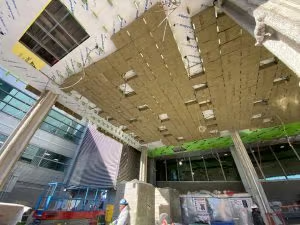
Construction of the JFK International Airport Terminal 4 Delta One Lounge in Jamaica, New York, which installed the GreenGirt CMH and GreenGirt CMH Delta Adjustable continuous insulation systems.
The JFK International Airport Terminal 4 Delta One Lounge in Jamaica, New York, was built to replace older Delta facilities, upgrading and enhancing energy efficiency throughout this building. The new Delta One lounge includes a spa, wellness room, multiple dining spaces, and other amenities for passengers.
To support energy performance goals in the new lounge, the GreenGirt CMH and GreenGirt CMH Delta Adjustable continuous insulation systems were installed at 5” deep and 24” on center, with mineral wool insulation and aluminum flat plate cladding. This configuration helps manage thermal losses at attachment points, supporting reduced peak loads and improved energy efficiency.
Conclusion
Across airports in the United States, the building envelope is a major driver of energy use because it directly influences heating and cooling loads. Selecting continuous insulation systems that eliminate thermal bridging helps maintain an effective insulation R-value and strengthens performance across the wall assembly. The projects highlighted here demonstrate a repeatable approach: specify GreenGirt and SMARTci systems to reduce conductive heat transfer, improve effective R-value, and support meaningful energy savings over the life of the building. Together, these projects show how high-performance sub-framing and enclosure detailing can help airports manage long operating schedules with lower energy demand.
Get Pricing for GreenGirt & SMARTci Systems for Your Next Airport Project
Getting ready to design wall assemblies for an airport project? Get a quote from your A2P territory representative for GreenGirt and SMARTci systems today.
Related Resources:
Download A2P’s Project-Ready Specs, Details, Drawings, & More
View A2P’s High-Performance Solutions for Walls, Roofs, & Windows
A2P’s Thermal Performance Calculator
–
–
Frequently Asked Questions
How does continuous insulation reduce energy use in airport terminals?
Airport terminals often run long hours and have large interior volumes, so heat loss/gain through the wall assembly can significantly increase heating and cooling loads. Continuous insulation helps reduce thermal bridging and improves effective R-value across the envelope, which can lower energy demand and support long-term operating cost savings.
What GreenGirt CMH spacing and depth were used at Gerald R. Ford International Airport’s terminal expansion?
At the Gerald R. Ford International Airport terminal expansion in Grand Rapids, MI, GreenGirt CMH was installed horizontally at 1.5″ deep and 24″ on center, with mineral wool insulation. The cladding included metal panels, MCM panels, terracotta, and ACM.
What is the SMARTci installation configuration used at Statesville Airport?
At the Statesville Airport terminal upgrade in North Carolina, SMARTci was installed horizontally on closed framing using GreenGirt Optima CMH Z-girts at 1.5″ deep and 24″ on center, with polyiso insulation and metal plate cladding.